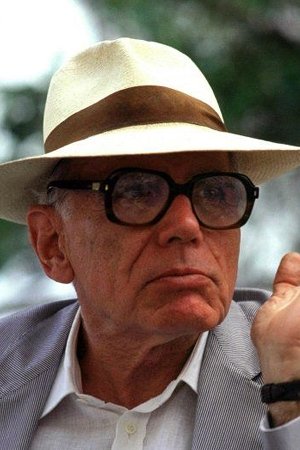
Luigi Comencini
Luigi Comencini (8 June 1916, Salò – 6 April 2007) was an Italian film director. Together with Dino Risi, Ettore Scola and Mario Monicelli, he was considered among the masters of the commedia all'italiana genre. His daughters Cristina and Francesca are both film... Read full bio →
Un ragazzo di Calabria
Set in 1960, the year of the Rome Olympics, a 13 year-old boy with aspirations to become an athlete befriends an ageing, disabled bus driver who understands his ambitions.
Voltati Eugenio
The film begins when Eugenio, a 14 year old child, is conduced from his grandparents home outside Rome, to Giancarlo (his father) in the city, by Giancarlo's friend (called "Moustache"). As Eugenio is bothering Moustache, he threatens Eugenio with leaving him in the middle of the country. He finally does it.
L'ingorgo
A tremendous congestion hit the Roma highway ring. The biggest traffic jam ever seen endures for more than 36 hours. People blocked in their cars react at the beginning normally. But the more the time advance the more we are witness of personal dramas, hysteric reactions and more. All the episodes are linked like one only plot.
Il gatto
Amedeo and Ofelia, middle aged brother and sister, own jointly an old decadent, but still attractive, condominium. They want to sell it, but before they have to evict all the tenants. Of course, these don't want to leave at all. The cat (Il Gatto), mascot and beloved by all, dies and this gives the two an excuse to enter the tenants' life.
Signore e signori, buonanotte
An episodic satire of the social and politic status of Italy in the 1970s through the programming of a television channel.
La donna della domenica
Police commissioner Santamaria is investigating the murder of the ambiguous architect Mr. Garrone. The investigations soon drive him into the Torino's high society. Santamaria suspect Anna Carla and at the same time falls in love for her. Lello is the lover of Massimo, Anna Carla’s gay friend.
Mio Dio, come sono caduta in basso!
The Marquise Eugenia di Maqueda, an orphan raised by the nuns, marries Raimondo Corrao, but on their wedding night she finds out that he is her brother. The piece of news is in a letter written from Paris by their father, a womaniser who lives and hides from them in the French headtown.
Lo scopone scientifico
Ogni anno, Peppinolo stracciarolo e la moglie Antonia attendono l'arrivo a Roma dell'eccentrica miliardaria statunitense che li sfida periodicamente a giocare a scopone scientifico.
Infanzia, vocazione e prime esperienze di Giacomo Casanova, veneziano
Through the childhood and the adolescence of Giacomo Casanova (from his memoirs), this is a description of how people live in the Venice of the 18th century: customs, habits, medicine, religion and most of all - the omnipresence of hypocrisy. Written by Yepok
Incompreso (Vita col figlio)
Un console britannico in servizio a Roma rimane vedovo e deve prendersi cura dei suoi due bambini. Andrea, il maggiore, soffre terribilmente per le scarse attenzioni che il padre gli dedica il quale sembra dedicarsi unicamente al piccolo Milo.
Il compagno Don Camillo
Genosse Don Camillo ist der fünfte Film aus der Don Camillo und Peppone-Reihe.
La ragazza di Bube
At the end of World War II, shallow, self-centered Mara is the prettiest girl in her small Italian village; Bebo is a Communist partisan who is finding it difficult to adjust to the dull banalities of life in peacetime.
Il commissario
Popular Italian comic Alberto Sordi does an excellent job of creating a bumbling yet effective police inspector by the unlikely name of Dante Lombardozzi, in this entertaining comedy-murder mystery by director Luigi Comencini.
A cavallo della tigre
Giacinto Rossi, a poor driver up to his neck in debt, is imprisoned for simulated crime. He finds himself in a cell with Tagliabue, an unscrupulous murderer; Sorcio, an elderly thief; and Papaleo, an honor-obsessed intellectual who murdered his fiancée's lover. Giacinto is forced by the three men to make a daring escape from prison.
Tutti a casa
Everybody Go Home (Italian: Tutti a casa) is a 1960 Italian film directed by Luigi Comencini. It features an international cast including the U.S. actors Martin Balsam, Alex Nicol and the Franco-Italian Serge Reggiani. Nino Manfredi was rejected for the starring role because Alberto Sordi wanted it.
Mogli pericolose
Federico, Bruno, Pirro and Benny are married. The first three have beautiful wifes, Benny instead is married to a ugly woman. Ornella is Bruno's wife, she is very jealous and maintains that all men are deceitful, granted the opportunity, while Claudine, Federico's wife, maintains the contrary point of view.
Mariti in città
In the summer, while their wives and children are away, four men try to enjoy their free time.
La finestra sul luna park
Back home after his wife's death, a migrant labourer faces a dilemma between a high-paying job overseas and one last chance at reconnecting with his son, who sees him only as a stranger because of all his years abroad.
Pane, amore e gelosia
The relationships between a veteran marshal, his bride-to-be, a rookie and his fiancée are severely tested when the young carabiniere is temporarily sent to a distant town.
Pane, amore e fantasia
When a veteran marshal is sent to a small town, he quickly falls for two women: a midwife and an earthy young woman nicknamed "Frisky".
Heidi
Nirgendwo ist es schöner als zwischen den Almen und Felsentälern, durch die Heidi mit ihrem Freund Peter streift. Trotzdem fährt das Bergmädchen in die Stadt, um ihrer kranken Freundin Klara zu helfen. Weit weg von zu Hause überfüllt sie bald das Heimweh. Der unvergeßliche Film nach dem berühmten Roman von Johanna Spyri.