
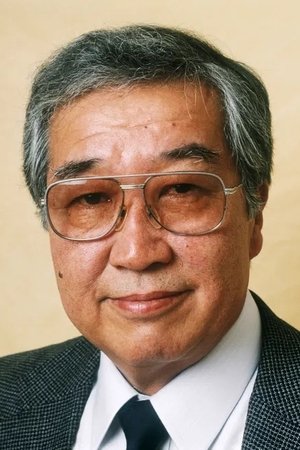
Shōhei Imamura
Shōhei Imamura (15 September 1926 – 30 May 2006) was a Japanese film director. He was the first Japanese director to win two Palme d'Or awards, but was never Oscar-nominated in any category.
Akai hashi no shita no nurui mizu
A newly unemployed salaryman meets a particularly sexual woman.
Kanzô sensei
At the end of WWII, Japanese doctor Akagi searches for the cure for hepatitis in the prisoner-of-war camp.
Unagi
A businessman kills his adulterous wife and is sent to prison. After his release, he opens a barbershop and meets new people, talking to almost no one except for an eel he befriended while in prison.
Kuroi ame
Shigematsu Shizuma, who lives with his family in a village near Fukuyama, was in Hiroshima with his wife and niece just after the devastating atomic bombing, a tragedy that cruelly took the lives of thousands of people and forever marked the harsh existence of the survivors.
Narayama bushiko
In a small village in a valley everyone who reaches the age of 70 must leave the village and go to a certain mountain top to die. If anyone should refuse he/she would disgrace their family. Old Orin is 69. This winter it is her turn to go to the mountain. But first she must make sure that her eldest son Tatsuhei finds a wife.
Eijanaika
The film depicts carnivalesque atmosphere summed up by the cry "Ei ja nai ka" ("Why not?") in Japan in 1867 and 1868 in the days leading to the Meiji Restoration. It examines the effects of the political and social upheaval of the time, and culminates in a revelrous march on the Tokyo Imperial Palace, which turns into a massacre.
Nippon Sengoshi - Madamu onboro no Seikatsu
Postwar Japan as it is described by Etsuko, the manager of a bar catering to foreigners in Yokosuka. The way of life of a woman brimming with vitality, who skipped the countryside right after the war and, with her womanhood as a weapon, lived through atomic bombings, black markets, prostitution aimed at American soldiers and the Korean War.
Kamigami no fukaki yokubo
Tokyo engineer Kariya arrives on a primitive tropical island, where he interacts with the Futori clan, to drill a well to power a sugar mill.
Erogotoshi-tachi yori: Jinruigaku nyûmon
A former Buddhist monk turned erotic filmmaker, Subuyan lives with hairdresser Haru and her two teenage children. Shooting two skin flicks per day, he somehow manages to stay out of the clutches of the yakuza, but real trouble starts when Haru discovers him lusting after her daughter.
Akai satsui
Sadako, cursed by generations before her and neglected by her common-law husband, falls prey to a brutal home intruder. But rather than become a victim, she forges a path to her own awakening.
Nippon konchûki
A woman, Tome, is born to a lower class family in Japan in 1918. The title refers to an insect, repeating its mistakes, as in an infinite circle. Imamura, with this metaphor, introduces the life of Tome, who keeps trying to change her poor life.
Kyûpora no aru machi
Set in Kawaguchi in the early 60s, this simple story chronicles the lives of foundry families and one girl's dreams of higher education.
Nianchan
The film tells the story of four orphans living in an impoverished mining town. An adaptation of a best-selling book based on the diary of a ten-year-old zainichi (ethnic Korean Japanese) girl, it was one of the first films to deal with the subject of zainichi identity and struggles in Japan.
Nishi Ginza ekimae
This short comedy concerns the extramarital affair of a drugstore owner. It is based on a popular song by the star of the film, Frank Nagai.
Bakumatsu taiyôden
Saheji, a man-about-town, gets stuck at a high-class brothel when he can’t pay the bill. He makes the best of his situation by performing various tasks amidst the tumult of the end of the shogunate—but always by making sure to get a “commission” for his troubles.
Fûsen
Haruki Murakami is a successful family man and the head of a camera company. Unbeknownst to Murakami, his arrogant son oscillates between a mistress and a new lover who sings at a nightclub. When Murakami’s daughter befriends the mistress, the affair throws the family into turmoil.