Mohsen Makhmalbaf
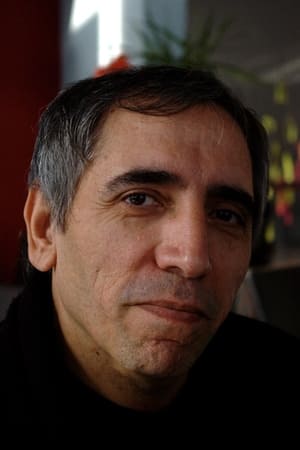
From Wikipedia, the free encyclopedia. Mohsen Makhmalbaf (Mohsen Mäxmälbaf, born May 29, 1957) is an Iranian film director, writer, editor, and producer. During 2007 he was the president of Asian Film Academy. Makhmalbaf's films have been widely presented in international... Read full bio →
The Gardener
The Gardener is a surreal film made using documentary-style techniques via the cameras of father and son (the Makhmalbafs) who go to Israel to learn about a religion (Baha'i faith) that they don't know much due to its taboo status in the country of both the filmmaker and the faith's birth - Iran.
Asbe du-pa
A wealthy boy hires a poor child to carry him around like a horse.
Alefbay-e afghan
Documentary showing the life of children of the Afghan villages bordering Iran, and how their life and culture were affected by Taliban regime.
Takhté siah
Itinerant Kurdish teachers, carrying blackboards on their backs, look for students in the hills and villages of Iran, near the Iraqi border during the Iran-Iraq war. Said falls in with a group of old men looking for their bombed-out village; he offers to guide them, and takes as his wife Halaleh, the clan's lone woman, a widow with a young son.
Roozi ke zan shodam
A girl reaches the age of nine and is supposed to act as a grown woman according to her family. A girl participates in a bike race against the will of her husband. An elderly woman decides she wants to buy all the things she always wanted but could never get.
Dastanha-ye Jazire
An anthology directed by Mohsen Makhmalbaf (Testing Democracy) and Dariush Mehrjui (Dear Cousin is Lost)
Sokout
Everyday, 10-year old Khorsid takes the bus to his work at an instrument maker's shop and everyday something unexpected happens.
Sib
After twelve years of imprisonment by their own parents, two sisters are finally released by social workers to face the outside world for the first time.
Nun va Goldoon
A semi-autobiographical account of Makmahlbaf's experience as a teenager when, as a 17-year-old, he stabbed a policeman at a protest rally. Two decades later, he tracks down the policeman he injured in an attempt to make amends.
Gabbeh
When an old couple washes their gabbeh - a type of Persian rug - a young woman magically appears and tells them her life story.
Salaam Cinema
Makhmalbaf puts an advertisement in the papers calling for an open casting for his next movie. However when hundreds of people show up, he decides to make a movie about the casting and the screen tests of the would-be actors.
Nassereddin Shah, Actor-e Cinema
The film follows a character known as The Cinematographer, who is looking for someone called Atieh (Future). As he calls out to her, he is magically transported back in time from the early twentieth century to the reign of Naser al-Din Shah in 19th century Iran.
Nobat e Asheghi
Three episodes, all with relatively similar plots about a love triangle between a woman and two men.
Dastforoush
The movie consists of three episodes that explore the lives of poor and desperate in Iran. In episode one, a very poor couple with many crippled children abandon their newly born baby in hopes that it will have a better future.
Bicycleran
The wife of Nasim, an Afghan immigrant in Iran, is gravely ill. He needs money to pay for her care, but his day labor digging wells does not pay enough. A friend connects Nasim to a two-bit promoter who sells tickets to watch Nasim ride a bicycle continuously for a week.
Arousi-ye Khouban
Haji is severely traumatized by the war with Iraq. Back from the front, he's unable to adapt to civilian life. Despite family opposition, his fiancée stands by him as together they challenge both the authority of family and state to lead their own lives.
Baykot
Valeh, a member of a leftist organization, is arrested by the SAVAK and sentenced to death. In prison, he reconsiders his relationships with members of his political cell, and begins to doubt the validity of the ideas for which he is condemned.