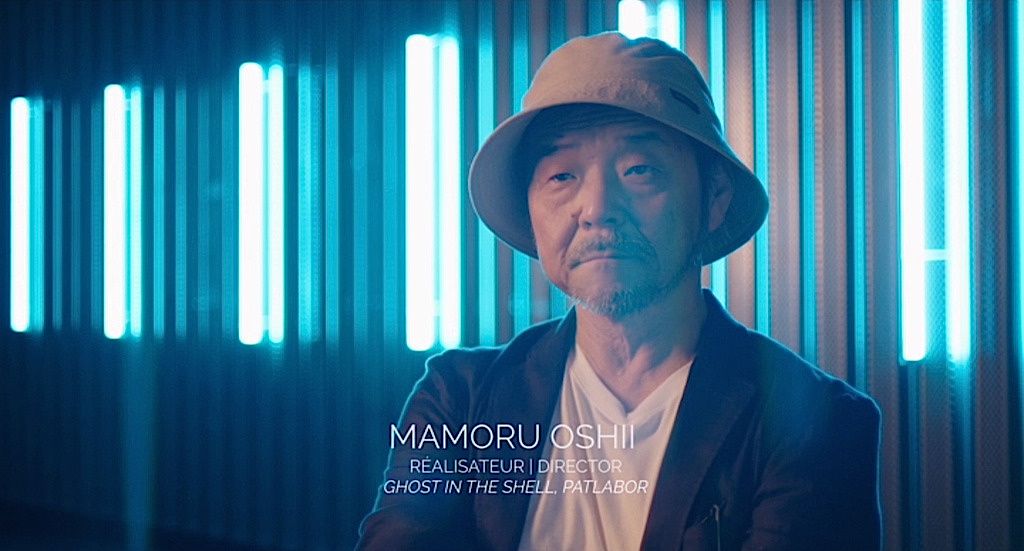
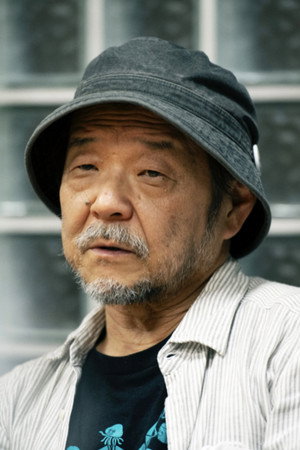
Mamoru Oshii
Mamoru Oshii (押井 守, Oshii Mamoru, born 8 August 1951) is a Japanese filmmaker, television director and writer. Famous for his philosophy-oriented storytelling, Oshii has directed a number of acclaimed anime films, including Urusei Yatsura 2: Beautiful Dreamer (1984), Angel's... Read full bio →
Garm Wars: The Last Druid
In a world where clone soldiers from three military tribes are locked in a perpetual battle of air, land and technology, one clone is separated from the battle and finds herself on the run with a group of unlikely companions.
Miyamoto Musashi: Sôken ni haseru yume
The film’s story centers on Musashi Miyamoto, one of the most famous swordsmen in Japanese history. He pioneered the Hyouhou Niten Ichi-ryuu style of two-sword fighting and wrote “The Book of Five Rings,” a book that has been compared to Sun Tzu’s “The Art of War” for its insight on tactics and strategy.
Asaruto gâruzu
Three women and one man - with an assortment of weaponry - wage war against giant mutant sandwhales in a barren digital landscape, all to achieve points within the virtual reality video game called Avalon.
Tachiguishi retsuden
A fictional documentary about changing Japanese eating habits and the colorful thieves that swindle the restaurants which serve them.
Kôkaku kidôtai: S.A.C. 2nd GIG - Individual eleven
The year is 2030, and an influx of refuges have effortlessly transformed themselves into a terrorist organization known as the "Individual Eleven." With a sadistic intent of mass destruction, will they triumph in victory or discover the gloomy pitfalls of defeat?
Inosensu: Innocence
Groundbreaking director Mamoru Oshii continues to push the boundaries of art and anime with this universally acclaimed cyber thriller following cyborg detective Batou as he tries to unravel the reasons for a murderous robot revolt in the year 2032. A quest for a killer that becomes a mind bending search for the meaning of life.
Kôkaku kidôtai: Stand Alone Complex
In the future when technological enhancements and robotics are a way of life, Major Motoko Kusanagi and Section 9 take care of the jobs that are too difficult for the police. Section 9 employs hackers, sharpshooters, detectives and cyborgs all in an effort to thwart cyber criminals and their plans to attack the innocent.
Jin-Rô
Jin Roh is a Japanese anime political thriller from 1999 based on a Manga from Mamoru Oshii. The film is set in the 1950’s depicting a Japanese dystopia city in a fight against terrorists.
Talking Head
A revered director with an obscure style, Rei Maruwa, has gone missing during the production of his latest animated feature, Talking Head. With the deadline approaching and next to no progress made, the producer calls in a "shadow director" with the ability to mimic any director's style.
Jigoku no banken: kerubersu
An elite police unit, rebelled against disarmament orders. Their leader Koichi escaped after the uprising. Years later, ex-member Inui seeks him, encountering unexpected twists. Upon finding Koichi, Inui realizes he's been manipulated.
Kidô keisatsu patorebâ: Gekijô-ban
A mysterious suicide and a series of unmanned robot run-aways sparks off a Police investigation into the suspicious software on-board thousands of industrial robots around Tokyo.
In the Aftermath: Angels Never Sleep
In a radiation-soaked wasteland, two surviving soldiers, Frank and Goose, search for essential supplies amid the rubble. After a violent confrontation, Frank is haunted by visions of an angelic young girl holding a giant egg, herself a refugee from another world altogether. Could the egg be the key to saving both their world?
Jigoku no banken: akai megane
Summer 1995. With the arrival of the "Age of Cats", the former Kerberos police unit is now disbanded. However one member remains, a stray dog who returns to his old roost after a three-years exile. This wild dog no longer has a master, but now the "Young Lady of Fate" will guide him on his journey...
Tenshi no tamago
Angel's Egg (天使のたまご Tenshi no Tamago?) is a Japanese anime feature film produced by Tokuma Shoten in 1985. A collaboration between popular artist Yoshitaka Amano and director Mamoru Oshii, it incorporates surrealistic and existentialist qualities. It uses almost no little dialogue, making it a commonly cited example of progressive anime.
Urusei Yatsura 2: Byûtifuru dorîmâ
The night before the school festival, things seem to be repeating themselves. Gradually, all the world functions come to a stop, the only ones that are not affected are a select group of student friends.
Darosu
In a near future, mankind has moved from a drained Earth to the Moon. Rebel acts of terrorism lead to conflicts with the Earth Federal Government. A mysterious entity called Dallos appears to restore hope.