
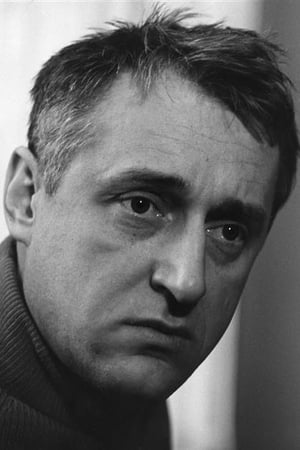
Evald Schorm
At one time, Czech director Evald Schorm was known as "the conscience of the Czech New Wave" and was known for using film to promote notions of compassion, equality, and individualism in the face of social structure. Originally an opera singer, the Prague native studied... Read full bio →
Den sedmý, osmá noc
An allegory set in an archetypal Czech village, it tells the story of what happens when a series of mysterious events take place, including the disappearance of the station master. While everything has a rational explanation, collective paranoia takes over and everyone's worst instincts are unleashed.
Faráruv konec
A verger, who likes to dress as a priest, is invited, by one of the villagers, to be the pastor at a vacant church. The atheist teacher resents the pastor, and tries to embarrass him in various ways, including being caught with the local girl, Majka.
Návrat ztraceného syna
Engineer Jan Sebek (Jan Kacer) is undergoing treatment in a mental home after his unsuccessful attempt to commit suicide. His therapist, via discussions both with the patient and with people who know him, tries to find out what made the young and seemingly satisfied man decide to end his own life.
Zrcadlení
A leading director of the Czech film renaissance provides a philosophical meditation on life and death, set amidst complex hospital apparatus and the sadness, hope, or resignation of the patients. Existentialist rather than optimist, the approach is one of humanistic atheism, accepting death as part of life.
Perlicky na dne
A quintet of vignettes based on short stories by Bohumil Hrabal: an eventful trip to the motorcycle races results in drunkenness, long-winded discussions, and death; two elderly men create false biographies; insurance agents visit an eccentric painter/goat farmer and his mother; guests at a wedding reception remain oblivious to outlying…