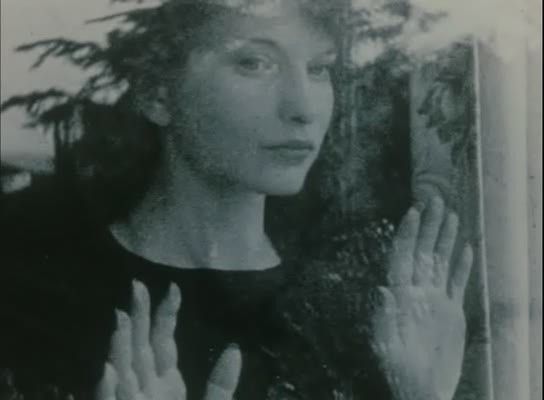

Stan Brakhage
Stan Brakhage is one of the most influential filmmakers in American avant-garde cinema, noted for his unflinching social commentaries and technical innovations. Over his nearly 40-year career, he has made over 200 films of varying length. He made his first film, Interim (1952)... Read full bio →
Chinese Series
Stan Brakhage's final film, made shortly before his death by wetting a filmstrip with saliva and using his fingernail to scratch marks into the emulsion. Preserved by the Academy Film Archive in 2009.
Persian Series #18
Persian Series #18 is almost calligraphic in its overlays of dark (occasionally colored) glyphs backed by brilliant color motifs.
Persian Series #17
Persian Series #17 is a series of quite distinct globules of paint brilliantly colored and shifting as if vertically in the plane (as different from the more horizontally oriented previous parts).
Persian Series #16
Persian Series #16 is an even more exaggerated contrast of color and black-and-white patterning.
Persian Series #15
Persian Series #15 is a rapid shift of patterns black & white playing off against muted coils of color.
Persian Series #14
Persian Series #14 is composed of muted color-shapes shifting variably in juxtaposition and contrast with high-contrast black & white abstract patterns.
Persian Series #13
Persian Series #13 is a series of extremely dark images, mostly in purples, greens, and fiery red-orange-yellows, shifting one to another in displays of textured shapes which suggest a thick tangle weave of threads.

Lovesong 2
LOVESONG 2 is a rapid recapitulation of the tactics of Lovesong, without the multiple rhythms of variable step-printing: it is a straight frame-to-frame 'run-through' of similar (albeit newly painted) images of love-making.
Lovesong
This lush, sensuous film is based on paintings of unusual variety and intricacy. Brakhage's desire to include all the complexities of living in his work is evident in this "love song."
The God of Day Had Gone Down Upon Him
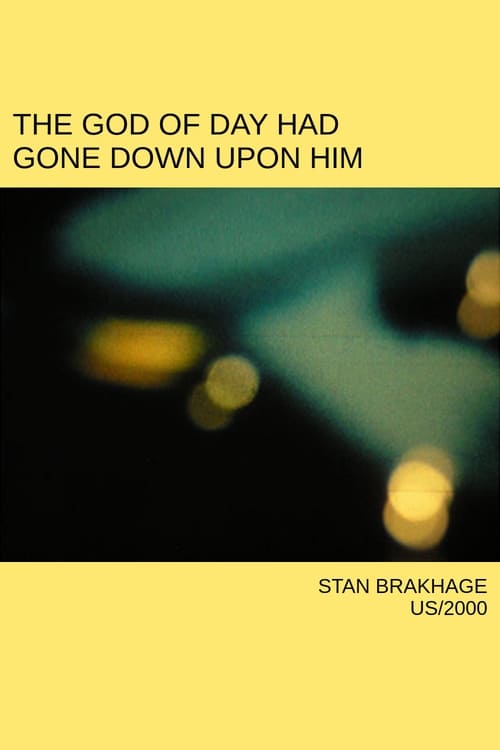
A collage of fire and water inferences on single-strand photography.
Persian Series #9
Sharp edged "chunks" of color set in black, straight, often multicolored, lines piercing shapes, imprisoning them, until they are fragmented bits of color in black: repeat of this theme again and again until darkness prevails, but is then broken open by pure white shards and "spears" restoring the original "dance" of hard-edge shapes and…
Persian Series #8
Pale petal and stem-like shapes counter punted rhythmically by an even paler "background" of truly ephemeral of truly ephemeral (almost invisible) shapes. Again, the foreground movement is clockwise and often "ribbed" as the film darkens into a blend of foreground/background and, eventually, a meld as of white hardened clots fretted by glyphs.
Persian Series #7
Very pale, thin, hieroglyphic pinks, greens and blues in a white space which is thickened over by ribbed mashes of these colors which "dissolve" into varied shapes almost suggesting landscapes and ephemeral bouquets.
Persian Series #6
Persian Series #6 begins with what appears to be dried red and yellow rose petals, suddenly shot-thru with blue which causes a shift to violets and greens.
Persian Series #12
"Hot" by-play of reds-greens-yellows in black, blurred, finally, as the color shapes are shifted violently from side to side, finally ending of a sharp entanglement of multicolored twig-like and/or stem-like forms.
Persian Series #11
Persian Series #11 begins with a "window" of yellow paint adrift in the full frame of multicolored paint-shapes. Alternating black-space/white-space exists as a back-drop for slashes and curves of color - reds and blues shifting to red-blue-green, then yellow, etc. slashed in black.
Persian Series #10
"Twigs" of color in space, and pure white "ghosts" of them in the background interspersed with dark amalgams of these and conglomerate forms.
The Dark Tower
This hand-painted, step-printed film begins with streaks of light and vibrantly colored forms. There appears, frame center, the tapered shape of a tower-- An imposing silhouette against the backdrop of the flaring sky.
Persian Series #5
Dark blood red slow shifting tones (often embedded in dark) / (often shot-thru with parallel wave-like lines) composed of all previous shapes and flowers as if trying, linearly, to evolve a glyph-script. Preserved by the Academy Film Archive in 2013.
Persian Series #4
Elaborate petal-like and multicolored flowers rising in white space until the whole field is as if crushed by floral designs in madly-swift mixtures of every conceivable previous shape from the Persian Series. Preserved by the Academy Film Archive in 2013.
Persian Series #3
Dark, fast-paced symmetry in mixed weave of tones moving from oranges & yellows to blue-greens, then retreating (dissolves of zooming away) to both rounded and soft-edged shapes shot with black. Preserved by the Academy Film Archive in 2013.
Persian Series #2
Multiple thrusts and then retractions of oranges, reds, blues, and the flickering, almost black, textural dissolves suggesting an amalgam approaching script. Preserved by the Academy Film Archive in 2013.
Persian Series #1
This hand-painted and elaborately step-printed work begins with a flourish of reds and yellows and purples in palpable fruit-like shapes interspersed by darkness, then becomes lit lightning-like by sharp multiply-colored twigs-of shape, all resolving into shapes of decay. Preserved by the Academy Film Archive in 2013.
...Reel Five
Reel #5 of (...) is composed of scratch-imagery edited to music by James Tenney. The music starts accompanied only by black leader: then there is a sudden flare of pure white which begins to flicker with negative-colored ephemeral shapes, until finally the music and a fulsome mass of scratched images are accompanying each other.
Yggdrasill: Whose Roots Are Stars in the Human Mind
This film, a combination of hand-painting and photography, is a fulsome exposition of the themes of DOG STAR MAN.
The Cat of the Worm's Green Realm
Flares of color break into streams of light, leaves, wood grain and prism-etched vegetation. A moon lifts out of this dark weave to be replaced by autumn leaves against a grainy sky, a fiery sky. A gray cat licks itself. A black cat sits quickly down on a green lawn.
Comingled Containers
Comingled Containers is an experimental short film by Stan Brakhage. "This 'return to photography' (after several years of only painting film) was made on the eve of cancer surgery - a kind of 'last testament,' if you will… an envisionment of the fleeting complexity of worldly phenomenon."
I Take These Truths
This film is entirely hand-painted and is composed of such an evolution of variably colored shapes that their inter-action with each other should constitute a purely visual "self-evident" (as prompted by the title). Each frame is printed twice, so that its effective speed (at 24fps) is 12 frames per second.
The Mammals of Victoria
The film begins with a series of horizontally running ocean tide waves, sometimes with mountains in the background, hand-painted patterns, sometimes step-printed hand-painting, abstractions composed of distorted (jammed) TV shapes in shades of blue with occasional red, refractions of light within the camera lens, sometimes mixed with…
The Chartres Series
A year and a half ago the filmmaker Nick Dorsky, hearing I was going to France, insisted I must see the Chartres Cathedral.
First Hymn to the Night - Novalis
“This is a hand-painted film whose emotionally referential shapes and colors are interwoven with words (in English) from the first Hymn to the Night by the late 18th century mystic poet Friedrich Philipp von Hardenberg, whose pen name was Novalis.
Black Ice
Inspired by a bad fall on a patch of black ice (that ultimately resulted in Brakhage's need for eye surgery), the filmmaker gives us something of a dreamlike descent through the fear and refractions of closed-eye vision regarding such an event.
Study in Color and Black and White
A hand-painted and photographically step-printed film, which exhibits variably shaped small areas of color (in a dark field) that explode into full frames of textured color interwoven with white scratch patterns that create a sense of interior depth and three-dimensional movement.
Stellar
This is a hand-painted film which has been photographically step-printed to achieve various effects of brief fades and fluidity-of-motion, and makes partial use of painted frames in repetition (for "close-up" of textures).
Boulder Blues and Pearls and...
Peripheral envisionment of daily life as the mind has it - i.e., a terrifying ecstasy of (hand-painted) synapting nerve ends back-firing from thought's grip of life.
For Marilyn
The film is officially untitled, but is referred to by the dedication that appears in place of a title card. It is dedicated to Marilyn Brakhage, the filmmaker's wife. Out of all the 350+ films that Stan Brakhage made, this was his personal favorite.
Delicacies of Molten Horror Synapse
Four superimposed rolls of hand-painted and bi-packed television negative imagery are edited so as to approximate the hypnagogic process whereby the optic nerves resist grotesque infusions of luminescent light.
Crack Glass Eulogy
A nostalgic envisionment of city living - the potential shards of memory seen as if always on the verge of cutting the mind to pieces.
A Child's Garden and the Serious Sea
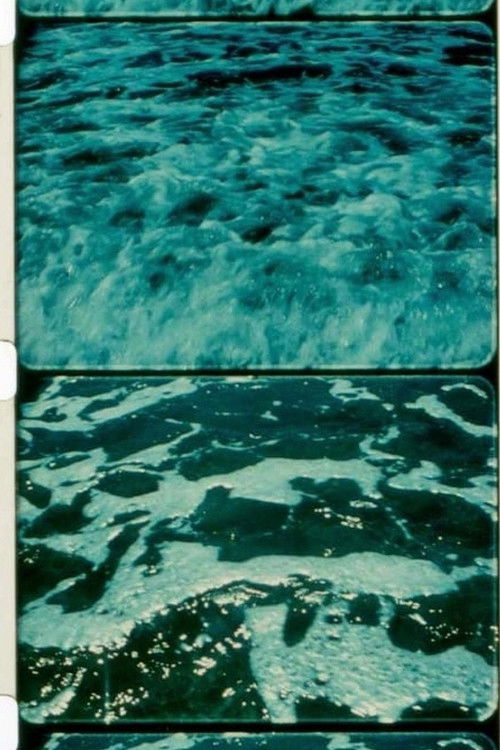
In his description for A CHILD'S GARDEN, Brakhage quotes from poets Ronald Johnson and Charles Olson.
Visions in Meditation #4: D.H. Lawrence
Photographing near Taos, New Mexico, where D.H.
Visions in Meditation #3: Plato's Cave
Brakhage begins here with Carlsbad Caverns as a stand-in for Plato's Cave and then responds to the philosopher's notion of inaccessible ideal forms by seeking out imagery that evokes worlds we cannot see.
Glaze of Cathexis
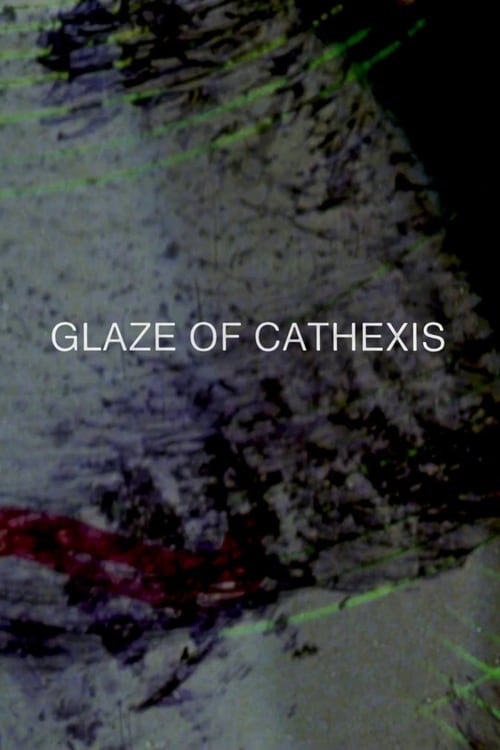
This hand-painted work is easily the most minutely detailed ever given to me to do, for it traces (as best I'm able) the hypnagogic after-effect of psychological cathexis as designed by Freud in his first (and unfinished) book on the subject - "Toward a Scientific Psychology." (SB)
Visions in Meditation #2: Mesa Verde
Visiting the famous Anasazi cliff dwellings in Colorado, abandoned about 1275, Brakhage thought, "There is terror here." And so he returns again and again to those empty stone homes.
Visions in Meditation #1
This is a film inspired by Gertrude Stein's "Stanzas In Meditation", in which the filmmaker has edited a meditative series of images of landscapes and human symbolism "indicative of that field-of-consciousness within which humanity survives thoughtfully." It is a film "as in a dream," this first film in a proposed series of such being composed…
Rage Net
Another of Brakhage’s works of “moving visual thinking,” Rage Net reminds one of the vibrant pioneering experiments of European animators of the 1920s.
I... Dreaming
Phrases of Stephen Foster, set to music by Joel Heartling, are set to film in this autobiographical piece: a solitary female voice, occasionally joined by a chorus, sings phrases of sorrow as we watch a solitary man in shadows in an unadorned house: he stretches out, he picks his feet, he walks across a room, he rocks in a chair.
The Dante Quartet
A visual representation, in four parts, of one man's internalization of "The Divine Comedy." Hell is a series of multicolored brush strokes against a white background; the speed of the changing images varies. "Hell Spit Flexion," or springing out of Hell, is on smaller film stock, taking the center of the frame.
Kindering
Refracted images, not unlike those in a funhouse mirror, display two children playing in a backyard, a boy and a girl. There's a dog, a swing, a picket fence, a Big Wheels trike. The grass is green and lush. A soundtrack mixes a chorus, swelling strings, and a child vocalizing. The effect is to idealize the images.
Night Music
Part of Three Hand-Painted Films, Night Music (originally painted on IMAX) attempts to capture the beauty of sadness, as the eyes have it when closed in meditation on sorrow.
Egyptian Series
A series of meditations on Egyptian hieroglyphs – designations (as I finally saw them) of nurturing godheads.
Arabic Numeral Series 19
“With some exceptions, the Arabics take the idea of the void as their ground. That is, the light we do see almost always seems to be set against darkness, or occasionally against white, these momentary flickers that materialize tenuously out of emptiness.
Arabic Numeral Series 18
“With some exceptions, the Arabics take the idea of the void as their ground. That is, the light we do see almost always seems to be set against darkness, or occasionally against white, these momentary flickers that materialize tenuously out of emptiness.
Arabic Numeral Series 17
“With some exceptions, the Arabics take the idea of the void as their ground. That is, the light we do see almost always seems to be set against darkness, or occasionally against white, these momentary flickers that materialize tenuously out of emptiness.
Arabic Numeral Series 16
“With some exceptions, the Arabics take the idea of the void as their ground. That is, the light we do see almost always seems to be set against darkness, or occasionally against white, these momentary flickers that materialize tenuously out of emptiness.
Arabic Numeral Series 15
“With some exceptions, the Arabics take the idea of the void as their ground. That is, the light we do see almost always seems to be set against darkness, or occasionally against white, these momentary flickers that materialize tenuously out of emptiness.
Arabic Numeral Series 14
“With some exceptions, the Arabics take the idea of the void as their ground. That is, the light we do see almost always seems to be set against darkness, or occasionally against white, these momentary flickers that materialize tenuously out of emptiness.
Unconscious London Strata
This film, photographed in London, is an exploration into the depths of unconscious reactions.
The Garden of Earthly Delights
A collage of two-dimensional images of vegetation, each appearing only for a moment, sometimes as a single image, more often with other bits of stem, leaf, bud, or petal. Often we see only the outline of objects against a black background. Black and green are occasionally joined by fragments of orange or of white and blue.
Arabic Numeral Series 9
“With some exceptions, the Arabics take the idea of the void as their ground. That is, the light we do see almost always seems to be set against darkness, or occasionally against white, these momentary flickers that materialize tenuously out of emptiness.
Arabic Numeral Series 8
“With some exceptions, the Arabics take the idea of the void as their ground. That is, the light we do see almost always seems to be set against darkness, or occasionally against white, these momentary flickers that materialize tenuously out of emptiness.
Arabic Numeral Series 7
“With some exceptions, the Arabics take the idea of the void as their ground. That is, the light we do see almost always seems to be set against darkness, or occasionally against white, these momentary flickers that materialize tenuously out of emptiness.
Arabic Numeral Series 6
“With some exceptions, the Arabics take the idea of the void as their ground. That is, the light we do see almost always seems to be set against darkness, or occasionally against white, these momentary flickers that materialize tenuously out of emptiness.
Arabic Numeral Series 5
“With some exceptions, the Arabics take the idea of the void as their ground. That is, the light we do see almost always seems to be set against darkness, or occasionally against white, these momentary flickers that materialize tenuously out of emptiness.
Arabic Numeral Series 4
“With some exceptions, the Arabics take the idea of the void as their ground. That is, the light we do see almost always seems to be set against darkness, or occasionally against white, these momentary flickers that materialize tenuously out of emptiness.
Arabic Numeral Series 3
“With some exceptions, the Arabics take the idea of the void as their ground. That is, the light we do see almost always seems to be set against darkness, or occasionally against white, these momentary flickers that materialize tenuously out of emptiness.
Arabic Numeral Series 2
“With some exceptions, the Arabics take the idea of the void as their ground. That is, the light we do see almost always seems to be set against darkness, or occasionally against white, these momentary flickers that materialize tenuously out of emptiness.
Arabic Numeral Series 13
“With some exceptions, the Arabics take the idea of the void as their ground. That is, the light we do see almost always seems to be set against darkness, or occasionally against white, these momentary flickers that materialize tenuously out of emptiness.
Arabic Numeral Series 12
This is the twelfth film in the twenty-part Arabics series. Brakhage creates blurry visual fields that are profoundly without ground, worlds of unidentifiable, ever-shifting shapes, and oceans of light and darkness.
Arabic Numeral Series 11
“With some exceptions, the Arabics take the idea of the void as their ground. That is, the light we do see almost always seems to be set against darkness, or occasionally against white, these momentary flickers that materialize tenuously out of emptiness.
Arabic Numeral Series 1
"With some exceptions, the Arabics take the idea of the void as their ground. That is, the light we do see almost always seems to be set against darkness, or occasionally against white, these momentary flickers that materialize tenuously out of emptiness.
Murder Psalm
Inspired in part by a dream he had of murdering his mother, Brakhage here gives us one of his profoundest meditations on human aggression.
Duplicity III
The final Duplicity film does seem at resolve with the term. All previous visual manifestations have been extended to their limits, through four-roll superimpositions. Obvious costumes and masks. Drama as an ultimate bid for truth, and totemic recognition of human and animal life-on-earth dominate all the evasions a duplicity otherwise affords.
Duplicity II
This, the second film of the continuing autobiographical Duplicity series, is composed of superimpositions much as the mind "dupes" remembered experience into some semblance of, say, composed surety rather than imbalanced accuracy - as thought may even warp "scene" into symmetry, or "face" into multitudinous mask.
Duplicity
A friend of many years' acquaintance showed me the duplicity of myself. And, midst guilt and anxiety, I came to see that duplicity often shows itself forth in semblance of sincerity. Then a dream informed me that SINCERITY IV, which I had just completed, was such a semblance.
Burial Path
The film begins with the image of a dead bird. The mind moves to forget, as well as to remember: this film graphs the process of forgetfulness against all oddities of remembered bird-shape.
The Domain of the Moment
Four films in contemplation upon those events which are so centered upon one moment that chronology seems almost obliterated or at least unimportant in remembrance.
Desert
Says Fred Camper of the film: "Invited to Riverside, California, Brakhage, under the mistaken impression that it was a desert, was planning a desert movie when he arrived to discover an unattractive suburban landscape. So he decided to make, and shoot, a desert on his motel room table".
The Text of Light
Time-lapse photography of books, paintings, reflections, and light falling on textures, shot entirely through a glass ashtray. "'All that is is light.' – Dun Scotus Erigena. 'To see the world in a grain of sand.' – William Blake. These are the primary impulses while working on this film.
The Stars Are Beautiful
We move back and forth between scenes of a family at home and thoughts about the stars and creation. Children hold chickens while an adult clips their wings; we see a forest; a narrator talks about stars and light and eternity. A dog joins the hens and the family, while the narrator explains the heavens. We see a bee up close.
Star Garden
The "star", as it is singular, is the sun; and it is metaphored, at the beginning of this film, by the projector anyone uses to show forth. Then the imaginary sun begins its course throughout whatever darkened room this film is seen within.
Sincerity I
This, the first completed reel of work-in-progress, draws on autobiographical energies and images which reflect the first 20 years of my living.
The Wold Shadow
A stand of birches. Sunlight brightens and dims, revealing more or less of the woods. A little grass is on the forest floor. Is there a shape in the shadows? Something green is out of focus. The light flashes, and the screen goes dark from time to time. We look up close at the bark of trees. Is the god of the forest to be seen?
The Shores of Phos: A Fable
Phos equals light, but then I did also want that word within the title which would designate place, as within the nationalities of "the fabulous" - a specific country of the imagination with tangible shores, etc. The film adheres strictly to the ordinary form of the classic fable. - Canyon Cinema
The Riddle of Lumen
“The Riddle of Lumen” presents an evenly paced sequence of images, which seem to follow an elusive logic. As in “Zorns Lemma” the viewer is called upon to recognize or invent a principle of association linking each shot with its predecessor. However, here the connection is nonverbal.
The Process
This film by Stan Brakhage investigates the process of memory and thought by melting a series of images and a field of color. The positive-negative flickering graphs a sort of shutter-window all over the matter of the vision.
The Act of Seeing with One's Own Eyes
At a morgue, forensic pathologists conduct autopsies of the corpses assigned. "S. Brakhage, entering, WITH HIS CAMERA, one of the forbidden, terrific locations of our culture, the autopsy room. It is a place wherein, inversely, life is cherished, for it exists to affirm that no one of us may die without our knowing exactly why.
Western History
A thumbnail History of the Western World, all centered around the basketball court. - Canyon Cinema
The Peaceable Kingdom
This film, one of the most perfect ever given to me to make, was inspired by the series of paintings of the same title by Edward Hicks. - SB
Sexual Meditation: Room with View
Directly in the tradition of SEXUAL MEDITATION #1: Motel, this "sequel" does explore further possibilities of nudes in a room. - Canyon Cinema
Door
This is the only all-inclusive autobiography I've yet managed; and as I'm still alive, it is to be understood as a metaphor which defines the limits of expectations.
Deus Ex
I have been many times very ill in hospitals; and I drew on all that experience while making DEUX EX.
The Weir-Falcon Saga
The term "The Weir-Falcon Saga" appeared to me, night after night, at the end of a series of dreams: I was "true" to the feeling, tho not the images, of those dreams in the editing of this and the following two films.
The Machine of Eden
"'Mis-takes' give birth to 'shape' (which, in this work, is 'matter,' subject and otherwise) amidst a weave of thought: ... the 'dream' of Eden will speak for itself." The second part of the of The Weir-Falcon Saga trilogy.
The Animals of Eden and After
THE ANIMALS OF EDEN AND AFTER ... is too mysterious, to me, for me to be able to write anything about it except that it seems to be the best film I've ever made. - SB
Sexual Meditation No. 1: Motel
This film was originally photographed in 1970 in regular 8mm. It was, a decade later, blown up to 16mm so that it could join the rest of the Sexual Meditation series.
Scenes from Under Childhood Section #4
Section IV is the longest of the four parts and the one in which the photographic material from the past plays the most prominent role.
Eyes
“After wishing for years to be given the opportunity of filming some of the more “mystical” occupations of our Times – which the average imagination turns into “bogeyman”… viz: Policemen, Doctors, Soldiers, Politicians, etc. – I was at last permitted to ride in a Pittsburgh police car, camera in hand” - Stan Brakhage.
Song 29
SONG 29: A portrait of the artist's mother (the Songs are a cycle of silent color 8mm films by the American experimental filmmaker Stan Brakhage produced from 1964 to 1969).
Song 28
Song 28: Scenes as texture (the Songs are a cycle of silent color 8mm films by the American experimental filmmaker Stan Brakhage produced from 1964 to 1969).
Song 27 (Part II) Rivers
Second Part of Song 27 (the Songs are a cycle of silent color 8mm films by the American experimental filmmaker Stan Brakhage produced from 1964 to 1969).
Scenes from Under Childhood Section #3
Section Ill is the most abstract section of the four, and the only one which does not contain old photographic material. The means used in previous sections to achieve abstraction and transformation of the realistic image are here employed in the extreme so that texture, color, and shape predominate.
Scenes from Under Childhood Section #2
In Section II we see a series of discrete sequences showing the children, now somewhat older, in different types of play. They manipulate tiny objects, doll furniture and miniature figures, dress up in costume, play outdoors, watch TV. We see them eating, sleeping, crying . . .
American 30's Song
“Begins with a portrait of the filmmaker’s father, moves through imagery of various forms of transportation (cars, boats, trains, and planes), and concludes with a ‘Postlude’ in which filmmaker Jerome Hill deplanes from a jet.” –Gerald R. Barrett & Wendy Brabner, STAN BRAKHAGE: A GUIDE TO REFERENCES AND RESOURCES
The Horseman, the Woman, and the Moth
Hand painting, dye treatments and direct collage edited into 'themes and variations' that tell 'a thousand and one' stories. - Stan Brakhage
Song 26
SONG 26: a conversation piece–a viz-a-visual, inspired by the (e)motional properties of talk: drone, bird-like twitterings, statement terror, & bombast (the Songs are a cycle of silent color 8mm films by the American experimental filmmaker Stan Brakhage produced from 1964 to 1969).
Scenes from Under Childhood Section #1
A visualization of the inner world of foetal beginnings, the infant, the baby, the child - a shattering of the "myths of childhood" through revelation of the extremes of violent terror and overwhelming joy of that world darkened to most adults by their sentimental remembering of it ... a "tone poem" for the eye - very inspired by the music of…
My Mountain Song 27
Image-by-image study of the Arapaho summit, in all seasons for two years; the clouds and the climate that carve this place in the landscape (the Songs are a cycle of silent color 8mm films by the American experimental filmmaker Stan Brakhage produced from 1964 to 1969).
Lovemaking
A film about the naturalness of sexuality. Its four sequences feature heterosexual and homosexual lovemaking, dogs copulating, and naked childen at play.
Song 25
SONGS 24 & 25: A naked boy and flute song; a being about nature (the Songs are a cycle of silent color 8mm films by the American experimental filmmaker Stan Brakhage produced from 1964 to 1969).
Song 24
SONGS 24 & 25: A naked boy and flute song; a being about nature (the Songs are a cycle of silent color 8mm films by the American experimental filmmaker Stan Brakhage produced from 1964 to 1969).
Eye Myth
After the title, a white screen gives way to a series of frames suggestive of abstract art, usually with one or two colors dominating and rapid change in the images.
23rd Psalm Branch: Part II
The second part: Brakhage’s layering of images spends less time with images of war, and begins filtering in scenes of Vienna and his home in Colorado. He sets up a comparison between “Kubelka’s Vienna” and his own.
23rd Psalm Branch: Part I
In this haunting but lyrical meditation on war, Brakhage intercuts 8-mm footage of Colorado with imagery from WWII newsreels. He responds to the violence and nightmare of war by painting directly on the filmstrip.
Song 22
SONGS 21 & 22: Two views of closed-eye vision (the Songs are a cycle of silent color 8mm films by the American experimental filmmaker Stan Brakhage produced from 1964 to 1969).
Song 21
SONGS 21 & 22: Two views of closed-eye vision (the Songs are a cycle of silent color 8mm films by the American experimental filmmaker Stan Brakhage produced from 1964 to 1969).
Song 20
SONGS 19 & 20: Women dancing and a light (the Songs are a cycle of silent color 8mm films by the American experimental filmmaker Stan Brakhage produced from 1964 to 1969).
Song 19
SONGS 19: Women dancing and a light (the Songs are a cycle of silent color 8mm films by the American experimental filmmaker Stan Brakhage produced from 1964 to 1969).
Song 18
SONGS 17 & 18: The movie house cathedral and a singular room (the Songs are a cycle of silent color 8mm films by the American experimental filmmaker Stan Brakhage produced from 1964 to 1969).
Song 17
SONGS 17 & 18: The movie house cathedral and a singular room (the Songs are a cycle of silent color 8mm films by the American experimental filmmaker Stan Brakhage produced from 1964 to 1969).
Song 16
SONG 16: A flowering of sex as in the mind’s eye, a joy (the Songs are a cycle of silent color 8mm films by the American experimental filmmaker Stan Brakhage produced from 1964 to 1969).
Pasht
In honor of the cat, so named, and the goddess of all cats which she was named after. - CAT Film Festival
Two: Creeley/McClure
Two portraits in relation to each other, the first of Robert Creeley, the second of Michael McClure. Preserved by the Academy Film Archive in 2007.
The Art of Vision
A deconstruction of Dog Star Man that takes the four rolls and shows them first combined, then each combination of three rolls, then each combination of two rolls, then each individual roll. The plot is of a man who goes up a mountain with a dog to chop down a tree but has some unspecified transcendental experience while he is there.
Song 9
SONG 9: Wedding source and substance (the Songs are a cycle of silent color 8mm films by the American experimental filmmaker Stan Brakhage produced from 1964 to 1969).
Song 14
SONG 14: Molds, paints and crystals (the Songs are a cycle of silent color 8mm films by the American experimental filmmaker Stan Brakhage produced from 1964 to 1969).
Song 13
SONG 13: A travel song of scenes and horizontals (the Songs are a cycle of silent color 8mm films by the American experimental filmmaker Stan Brakhage produced from 1964 to 1969).
Song 12
SONG 12: Verticals and shadows caught in glass traps (the Songs are a cycle of silent color 8mm films by the American experimental filmmaker Stan Brakhage produced from 1964 to 1969).
Song 11
SONG 11: Fires, windows, an insect, a lyre of rain scratches (the Songs are a cycle of silent color 8mm films by the American experimental filmmaker Stan Brakhage produced from 1964 to 1969).
Song 10
SONG 10: Sitting around (the Songs are a cycle of silent color 8mm films by the American experimental filmmaker Stan Brakhage produced from 1964 to 1969).
Fire of Waters
Black atmosphere, with depth-enhancing points of light, broken into shades of dim silhouettes by the ephemeral cloud-glow of lightning.
Dog Star Man
Experimental film following a cycle of seasons as well as the stretch of a single day as a man and his dog slowly ascend a mountain.
Blood's Tone
BLUE WHITE, "an intonation of child birth"; BLOOD'S TONE, "a golden nursing film"; VEIN, "a film of baby Buddha masturbation."
15 Song Traits
A series of individual portraits of friends and family, all interrelated in what might be called a branch growing directly from the trunk of SONGS 1 thru 14.
Song 8
SONG 8: Sea Creatures. The Songs are a cycle of silent color 8mm films by the American experimental filmmaker Stan Brakhage produced from 1963 to 1969.
Song 7
SONG 7: San Francisco (the Songs are a cycle of silent color 8mm films by the American experimental filmmaker Stan Brakhage produced from 1964 to 1969).
Song 6
SONG 6: The painted veil via moth-death (the Songs are a cycle of silent color 8mm films by the American experimental filmmaker Stan Brakhage produced from 1964 to 1969).
Song 5
SONG 5: A childbirth song (the Songs are a cycle of silent color 8mm films by the American experimental filmmaker Stan Brakhage produced from 1964 to 1969).
Song 4
SONG 4: Three girls playing with a ball. Hand painted (the Songs are a cycle of silent color 8mm films by the American experimental filmmaker Stan Brakhage produced from 1964 to 1969).
Song 3
SONGS 2 & 3: Fire and a mind’s movement in remembering (the Songs are a cycle of silent color 8mm films by the American experimental filmmaker Stan Brakhage produced from 1964 to 1969).
Song 2
SONGS 2 & 3: Fire and a mind’s movement in remembering (the Songs are a cycle of silent color 8mm films by the American experimental filmmaker Stan Brakhage produced from 1964 to 1969).
Song 1
SONG 1: Portrait of a lady (the Songs are a cycle of silent color 8mm films by the American experimental filmmaker Stan Brakhage produced from 1964 to 1969).
Mothlight
Seemingly at random, the wings and other bits of moths and insects move rapidly across the screen. Most are brown or sepia; up close, we can see patterns within wings, similar to the veins in a leaf. Sometimes the images look like paper cutouts, like Matisse. Green objects occasionally appear. Most wings are translucent.
Blue Moses
One of the few Brakhage films featuring spoken dialogue and a central character, this sly and bitter polemic pits an actor (poet? director?) against an unseen audience. Preserved by the Academy Film Archive in 2007.
Thigh Line Lyre Triangular
Only at a crisis do I see both the scene as I've been trained to see it ( that is, with Renaissance perspective, three-dimensional logic–colors as we've been trained to call a color a color, as so forth) and patterns that move straight out from the inside of the mind through the optic nerves... spots before my eyes, so to speak... and it's…
The Dead
"The Dead became my first work in which things that might very easily be taken as symbols were so photographed as to destroy all their symbolic potential. The action of making The Dead kept me alive." Preserved by the Academy Film Archive in partnership with The Film Foundation in 2013.
Window Water Baby Moving
On a winter's day, a woman stretches near a window then sits in a bathtub of water. She's happy. Her lover is nearby; there are close ups of her face, her pregnant belly, and his hands caressing her. She gives birth: we see the crowning of the baby's head, then the birth itself; we watch a pair of hands tie off and cut the umbilical cord.
Wedlock House: An Intercourse
We see a film negative of a nude couple embracing in bed. Then, back in regular black and white images, we see them alone and together, clothed, at home. It's night, she sees his reflection in the window, she closes the drapes. After sex, again in a black and white negative, they sit, smoke, have coffee. They kiss, she smiles.
Sirius Remembered
A tribute to Stan Brakhage's pet dog Sirius, whose decompostion was recorded over 6 months after he had died. Preserved by the Academy Film Archive in partnership with The Film Foundation in 2010.
Cat's Cradle
Images of two women, two men, and a gray cat form a montage of rapid bits of movement. A woman is in a bedroom, another wears an apron: they work with their hands, occasionally looking up. A man enters a room, a woman smiles. He sits, another man sits and smokes. The cat stretches. There are close-ups of each.
Anticipation of the Night
First person view of a man, seen only in shadow, attempting to connect with the world around him. Preserved by the Academy Film Archive in 2013.
Loving
In Loving (1957), a couple make love in the sun and their optic system flares -- it's really the nervous system's ecstasy -- in oranges and yellows and whites. - Stan Brakhage. Preserved by the Academy Film Archive in partnership with The Film Foundation in 2009.
Daybreak
These two films investigate frustrations in loving, DAYBREAK with a girl as object, WHITEYE with the camera as subject. Preserved by the Academy Film Archive in 2013.
Flesh of Morning
Short B/W film about the textures of the human skin and household objects, showing Brakhage in the morning as reality distorts around him. Revised in 1986.
The Wonder Ring
An important early film by Stan Brakhage, which Joseph Cornell commissioned as a record of New York's Third Avenue elevated train before it was torn down.
Reflections on Black
A series of terrifying dramas of male-female relationships offset against the background of a New York tenement. Preserved by the Academy Film Archive in partnership with The Film Foundation in 2012.
Centuries of June
Centuries of June, perhaps more than any Cornell film, is a naked attempt to capture the soul of a place and the mood of a disappearing moment.
Desistfilm
Four young men and a young woman sit in boredom. She smokes while one strums a lute, one looks at a magazine, and two fiddle with string. The door opens and in comes a young man, cigarette between his lips, a swagger on his face. The young woman laughs. As the four young men continue disconnected activities, the other two become a couple.