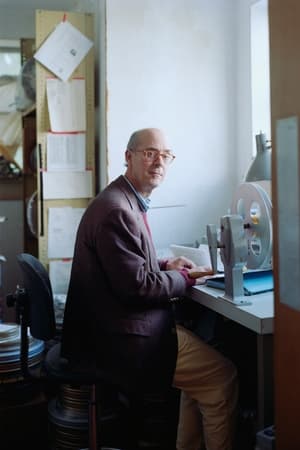
Robert Beavers
Robert Beavers (born 1949) is an American experimental filmmaker whose work stands among the most significant in postwar avant-garde cinema. He is best known for My Hand Outstretched to the Winged Distance and Sightless Measure, an 18-film cycle spanning decades of work, much... Read full bio →
Pitcher of Colored Light
Filmed in his mother’s house and garden, Beavers traces shifting shadows across seasons, capturing a blend of solitude and peace. Light and shadow become passages to memory, as the film transforms walls and spaces into reflections of place, time, and inner voice.
Early Monthly Segments
Filmed when Beavers was 18–19, this self-portrait depicts him and Gregory J. Markopoulos in their Swiss apartment. A diary of domestic life, it transforms everyday objects and intimate details into a charged meditation on love, memory, and desire.
The Hedge Theater
Filmed in Rome in the 1980s, the work draws on Borromini’s Baroque architecture and Il Sassetta’s St. Martin and the Beggar. Beavers contrasts winter’s subdued light with the verdant growth of spring, constructing a precise montage in which image and sound form a poetic dialogue.
The Ground
Interweaving stonework and filmmaking, Beavers evokes memory through hammer strokes and chisel sounds that shape both image and rhythm. In this dialogue of repetition and variation, the film carves out a space where emptiness itself gains form, allowing vision beyond sight.
Sotiros
Distilled in 1996 from an earlier 50-minute trilogy, this 26-minute film was shot in Greece and Austria and structured around two recurring intertitles, “He said” and “he said.” Each introduces delicate studies of light and place—hotel interiors, cafés, hillsides, storefronts, and street life—framed in parallel variations.
The Stoas
Named for the colonnades of the ancient Lyceum, the film juxtaposes industrial arcades in golden morning light with lush images of streams and wooded glens. Empty of human figures yet rich in presence, Beavers composes landscapes that evoke both 19th-century painting and a quiet sense of spiritual immanence.
Wingseed
A meditation on landscape and desire, the film juxtaposes arid terrain, wild grasses, and herds of goats with the naked figure of a torso in shifting light. Shepherd’s calls, flute phrases, and the rhythm of bells echo Beavers’ quick, side-to-side camera movements, building to a vibrant visual and sonic ostinato.
Amor
Shot in Rome and Salzburg’s natural theatre, the film uses cutting and sewing as metaphors for love, separation, and the craft of montage. Cloth being trimmed, hands clapping, and tools striking accompany images of tailoring, architectural restoration, and Beavers himself in a new suit, linking gesture and sound to the editing process.
Ruskin
Beavers traces John Ruskin’s legacy from London to the Alps and especially Venice, where the camera lingers on stone and water in dialogue with Ruskin’s writings. Turning pages and images of Unto This Last evoke the critic’s enduring perceptions and political vision, preserved through acts of reading.
Work Done
Shot in Florence and the Alps, the film contemplates traditional European labor—ice vaults, bookbinding, cooking—while largely omitting human protagonists. Through textural equivalences between workshop and field, book and forest, stone and mountain, Beavers reflects on the resonance of craft and place.
The Painting
Beavers intercuts scenes of traffic in Bern with details from the 15th-century altarpiece The Martyrdom of St. Hippolytus. In its revised form, the film gains a psychodramatic intensity, juxtaposing Markopoulos in shafts of light with a torn self-portrait and recurring shots of a shattered windowpane.
From the Notebook of...
Shot in Florence, the film draws on Leonardo da Vinci’s notebooks and Paul Valéry’s essay on da Vinci’s creative process to explore parallels between Renaissance space and the moving image.
Still Light
Filmed on Hydra, the work studies a young man’s face across shifting light and landscape, framed through customized masks and filters. The constant visage, set against iconic surroundings, evokes a Renaissance portrait while reflecting on binaries of youth and age, creation and critique, image and text.