Jean Rouch
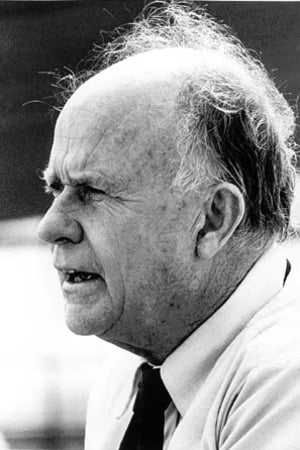
Jean Rouch (French: [ʁuʃ]; 31 May 1917, Paris – 18 February 2004, Niger) was a French filmmaker and anthropologist. He is considered to be one of the founders of cinéma-vérité in France, which shared the aesthetics of the direct cinema. Rouch's practice as a filmmaker for... Read full bio →
Petit à petit
An African travels to Paris to learn about the construction of tall buildings, but is soon taken up with the oddities of French life.
Jaguar
Jaguar, a kind of road movie on foot, tells of the journey of three friends, Damouré, Lam and Illo, on their way to the Gold Coast where they hope to make a fortune in order to return to their village in a few months.
La Chasse au lion à l'arc
Etnographic documentary about lion hunting in Africa.
Paris vu par...
Six vignettes set in different sections of Paris, by six directors. St. Germain des Pres (Douchet), Gare du Nord (Rouch), Rue St. Denis (Pollet), and Montparnasse et Levallois (Godard) are stories of love, flirtation and prostitution; Place d'Etoile (Rohmer) concerns a haberdasher and his umbrella; and La Muette (Chabrol), a bourgeois family and...
La punition
An aimless young woman is sent home from school with nothing to do. Drifting through the streets of Paris, she comes across a variety of people.
La pyramide humaine
Jean Rouch gives a group of black and white teenagers a "what if" question: what if they socialised with each other? The teenagers then improvise their own characters and situations.
Chronique d'un été (Paris 1960)
The film begins with a discussion between Rouch and Morin on whether or not it is possible to act sincerely in front of a camera. A cast of real life individuals are then introduced and are led by the filmmakers to discuss topics on the themes of French society and happiness in the working class.
Moi, un noir
Winner of the prestigious Prix Louis Delluc in 1958, "Moi, un noir" marked Jean Rouch's break with traditional ethnography, and his embrace of the collaborative and improvisatory strategies he called "shared ethnography" and "ethnofiction".
Les maîtres fous
The subject of the film was the Hauka movement. The Hauka movement consisted of mimicry and dancing to become possessed by French Colonial administrators. The participants performed the same elaborate military ceremonies of their colonial occupiers, but in more of a trance than true recreation.