
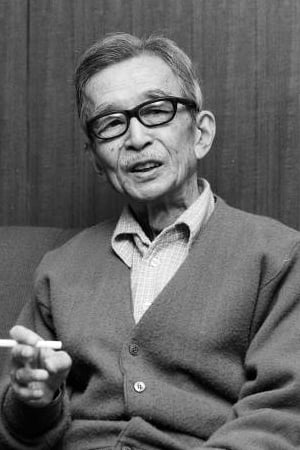
Nobuo Nakamura
Nobuo Nakamura (中村伸郎 Nakamura Nobuo, September 14, 1908–July 5, 1991 ) was a Japanese actor, who made notable appearances in the films of Akira Kurosawa and Yasujiro Ozu in the 1950s and 1960s. Perhaps his most famous roles were those of the callous deputy mayor in Kurosawa's... Read full bio →
Featured Characters
Roles you can spot in Whatthemovie snapshots






Tampopo
a pair of truck drivers happen onto a decrepit roadside fast food stop selling ramen noodles and help the widowed owner, Tampopo, turn her establishment into a paragon of the "art of noodle soup making".
Akuma no temari-uta
Kôsuke Kindaichi, a somewhat peculiar private detective, visits a remote town. He meets a police detective and they start to investigate an old unsolved murder. Then some murders happen. Kindaichi must find out about the past in order to reveal who the murderer is.
Nihon chinbotsu
The shorted re-edited American version of Submersion of Japan, in which Japan slowly sinks into the sea as the US and Japan work together to stop it.
Nihon no ichiban nagai hi
Following the detonation of the atomic bombs on Hiroshima and Nagasaki, the Japanese military and the government clash over the demand from the Allies for unconditional surrender. Minister of the Army Anami leads the military officers who propose to fight on, even to the death of every Japanese citizen.
Furankenshutain no kaijû: Sanda tai Gaira
An experimental lab animal called a gargantua escapes from his captors and is suspected to be the creature that is killing people all over the countryside. But when the gargantua from the lab appears at the same time as the evil gargantua, the two begin to battle across Japan.
Ai no kawaki
Etsuko, after her husbands death, moves in with her in-laws. With ambivalence, she finds herself sexually involved with her father-in-law. She then finds herself desiring young gardener Saburo, who has a relationship with the maid Miyo.
Furankenshutain tai chitei kaijû Baragon
This Film was banned in 1995 for Political Reasons
Uchû daikaijû Dogora
A floating amorphous life-form descends from the atmosphere to consume carbon in the form of diamonds.
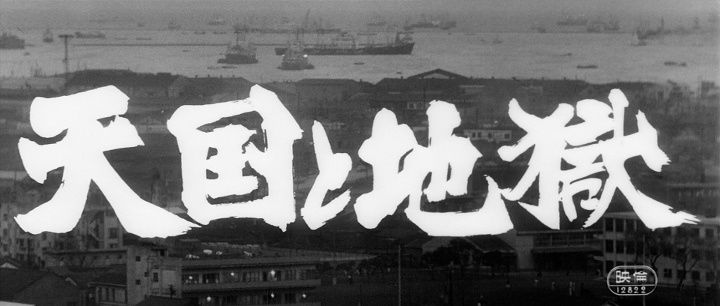
Tengoku to jigoku
An executive on the outs with his company gets in deeper when he pays off kidnappers who have abducted the wrong boy.
Sanma no aji
Shuhei Hirayama is a widower with a 24-year-old daughter. Gradually, he comes to realize that she should not be obliged to look after him for the rest of his life, so he arranges a marriage for her.
Tsuma to shite onna to shite
The real mother of the two children of a respectable university professor is not his wife, but his mistress, the hostess of a Ginza bar the family frequents.
Sekai daisensô
The stories of Japanese civilians with the specter of a nuclear World War III looming.
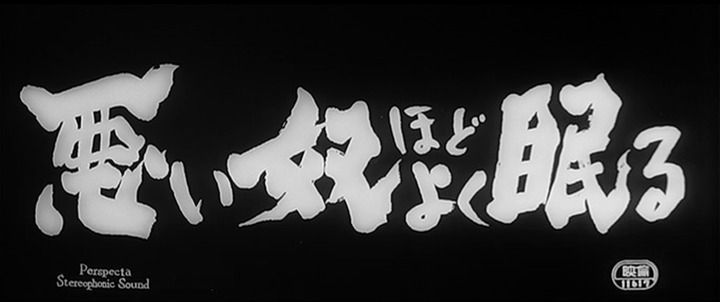
Warui yatsu hodo yoku nemuru
A young executive hunts down his father’s killer. Continuing his legendary collaboration with actor Toshiro Mifune, Kurosawa combines elements of Hamlet and American film noir to chilling effect in exposing the corrupt boardrooms of postwar corporate Japan.
Nise daigakusei
A youth drama set in a Japanese university which is home to a group of active, leftist students.
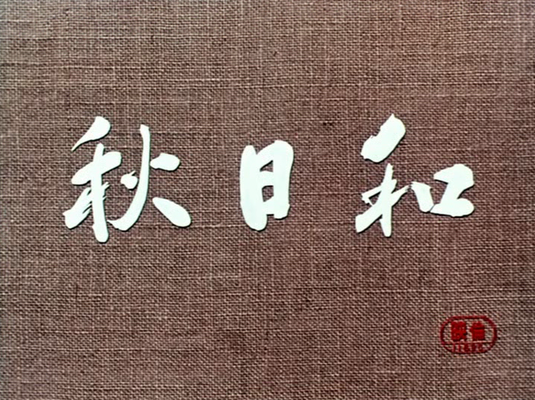
Akibiyori
A widow tries to marry off her daughter with the help of her late husband's three friends.
Ningen no jôken (I)
The Human Condition is a Japanese epic film trilogy made between 1959 and 1961. The trilogy follows the life of Kaji, a Japanese pacifist and socialist, as he tries to survive in the fascist and oppressive world of WWII-era Japan. No Greater Love (1959) opens with Kaji marrying his sweetheart Michiko despite his misgivings about the future.
Higanbana
Later in his career, Ozu started becoming increasingly sympathetic with the younger generation, a shift that was cemented in Equinox Flower, his gorgeously detailed first color film, about an old-fashioned father and his newfangled daughter.
Tôkyô boshoku
Two sisters find out the existence of their long-lost mother, but the younger cannot take the truth of being abandoned as a child.
Kumonosu-jô
Mikio and Washizu are the commanders of the 1st and 2nd Fortress under a local lord, who reigns in the Spiders' Web Castle. After defeating the lord's enemies in battle, they visit the fortress. Washizu, driven by his wife, conspires and murders the lord, becoming lord of the castle. But his evil deeds come back to haunt him.
Yûyake-gumo
A coming-of-age story portrayed as the loss of all youthful illusions. Sixteen-year-old Yoichi dreams of becoming a sailor. His parents are fishmongers, and Yoichi lives together with them and his four siblings in cramped living conditions.
Soshun
A young salaryman and his wife struggle within the confines of their passionless relationship while he embarks on an extramarital affair.
Nagareru
Otsuta is running the geisha house Tsuta in Tokyo. Her business is heavily in debt. Her daughter Katsuyo doesn't see any future in her mothers trade in the late days of Geisha. But Otsuta will not give up. This film portraits the day time life of geisha when not entertaining customers.
Ikimono no kiroku
Kiichi Nakajima (Toshirō Mifune), an elderly foundry owner convinced that Japan will be affected by an imminent nuclear war, resolves to move his family to safety in Brazil. His family decides to have him ruled incompetent and Dr. Harada (Takashi Shimura), a Domestic Court counselor, attempts to arbitrate.
Tôkyô monogatari
An old couple visit their children and grandchildren in the city, but receive little attention.
Ikiru
Kanji Watanabe is a middle-aged man who has worked in the same monotonous bureaucratic position for decades. Learning he has cancer, he starts to look for the meaning of his life.