
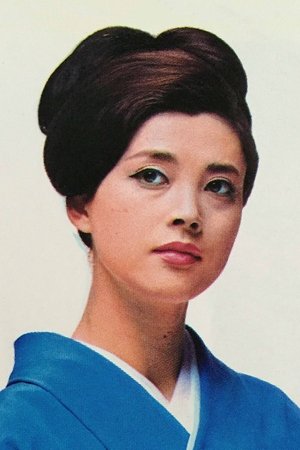
Mariko Okada
From Wikipedia, the free encyclopedia Mariko Okada (岡田 茉莉子, Okada Mariko, born 11 January 1933) is a Japanese stage and film actress who starred in films of directors Mikio Naruse, Yasujirō Ozu, Keisuke Kinoshita and others. She was married to film director Yoshishige... Read full bio →
Featured Characters
Roles you can spot in Whatthemovie snapshots




Kagami no onnatachi
Three women who share memories of the Hiroshima disaster try to uncover the hidden family ties that may or may not bind them together.
Marusa no onna
Intrepid tax investigator Ryoko Itakura sets her sights on the mysterious and philandering Hideki Gondo, a suspected millionaire and proprietor of a thriving chain of seedy hourly hotels, who has for years succeeded at hiding the true extent of his assets from the Japanese authorities.
Tampopo
a pair of truck drivers happen onto a decrepit roadside fast food stop selling ramen noodles and help the widowed owner, Tampopo, turn her establishment into a paragon of the "art of noodle soup making".
Akô-jô danzetsu
This is the story of "The Forty-Seven Ronin." Based on historical events in 1701-2, the movie tells the tale of the Asano clan's downfall and the revenge of its former samurai on the perpetrator of the catastrophe. Lord Asano was goaded, or tricked, into drawing his sword inside the Shogun's palace -- a crime which carried the death penalty.
Ningen no shômei
When an American is murdered in a Japanese inn, Tokyo police detective Munesue follows the trail of the killer to New York. There he is joined by a New York City detective named Shuftan and together they sort out the crime.
Kokuhakuteki joyûron
The lives of three movie actresses unfold, transform and get exposed. Each of them owes their choice of profession to a respective traumatic event.
Rengoku eroica
Rikiya Shoda is an engineer working for the Atomic Agency in Japan. One day, his wife Nanako returns home with a lost teenager called Ayu. A man, pretending to be the father, comes to get her back; Ayu keeps telling him that Rikiya and Nanako are her parents. Through this disruption, Rikiya suddenly starts remembering his youth as a revolutionary.
Erosu purasu Gyakusatsu
Yoshida’s masterpiece is a daring analysis of sex, politics, revolution and art in modern Japan that shifts back and forth between the 1910s and 1960s. Long and complex, but with inspiring content and enchanting cinematography. One of the highlights of Japanese post-war cinema.
Saraba natsu no hikari
The setup here is a couple. They are both Japanese. She is married to a European, is haunted by the Nagasaki bomb which killed her father. The two are in love.
Juhyô no yoromeki
In an isolated mountain resort, a woman gets involved in a love triangle between herself, her volatile lover and her ex-boyfriend, for whom she had platonic feelings.
Jôen
A woman, unhappily married to a cheating executive, starts meeting her dead mother's lover and gets thrown into a romantic dilemma after succumbing to a rough laborer.
Honô to onna
Shingo and Ritsuko have a baby: Takashi. They happen to be a happy couple, but soon Ritsuko wants to know who is the true father of Takashi, born by artificial insemination.
Onna no mizûmi
Freely based on a novel by Kawabata... this film is about housewife Miyako and the collapse of her socially acceptable Facad. After eight years of uneventful marriage she begins an affair and let themselves be photographed naked.
Mizu de kakareta monogatari
Struggling with his true emotions, dreams, memories of the past and the reality Shizuo is about to marry, but is torn between his wife-to-be and the love to his mother.
Sanma no aji
Shuhei Hirayama is a widower with a 24-year-old daughter. Gradually, he comes to realize that she should not be obliged to look after him for the rest of his life, so he arranges a marriage for her.
Akitsu onsen
Just after WW2, a romance between an innkeeper and a man with tuberculosis unravels near a thermal spring.
Akibiyori
A widow tries to marry off her daughter with the help of her late husband's three friends.
Nagareru
Otsuta is running the geisha house Tsuta in Tokyo. Her business is heavily in debt. Her daughter Katsuyo doesn't see any future in her mothers trade in the late days of Geisha. But Otsuta will not give up. This film portraits the day time life of geisha when not entertaining customers.
Miyamoto Musashi kanketsuhen: kettô Ganryûjima
Musashi Miyamoto is challenged to a duel by a confident swordsman Sasaki Kojiro. He agrees to fight him in a year's time.
Zoku Miyamoto Musashi: Ichijôji no kettô
After years on the road establishing his reputation as Japan's greatest fencer, Takezo returns to Kyoto. Otsu waits for him, yet he has come not for her but to challenge the leader of the region's finest school of fencing. To prove his valor and skill, he walks deliberately into ambushes set up by the school's followers.
Ukigumo
This film is based on flashbacks, which I'll ignore here for the sake of clarity. Married Japanese forester during WWII is sent to Indochina to manage forests. He meets a young Japanese typist and promises to leave his wife. He doesn't and after the war, she turns up and the affair resumes.
Miyamoto Musashi
Starring Toshiro Mifune as Musashi Miyamoti, this first film in Hiroshi Inagaki's Samurai Trilogy won a 1956 Honorary Oscar for Best Foreign Film. Struggling to elevate himself from his low caste in 17th century Japan, Mayamoto trains to become a mighty samurai warrior. In the film's bracing climax, Miyamoto finally gets a chance to prove himself.