
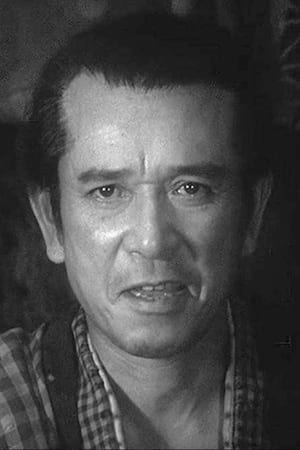
Kōji Mitsui
Mitsui Koji ( March 6, 1910 - April 20, 1979 ) was a Japanese actor. His real name was Mitsui Hikohide. After the war, he played an active role as a supporting actor in films directed by Akira Kurosawa and Yasujiro Ozu . His former stage name was Mitsui Hideo. Changed his... Read full bio →
Featured Characters
Roles you can spot in Whatthemovie snapshots




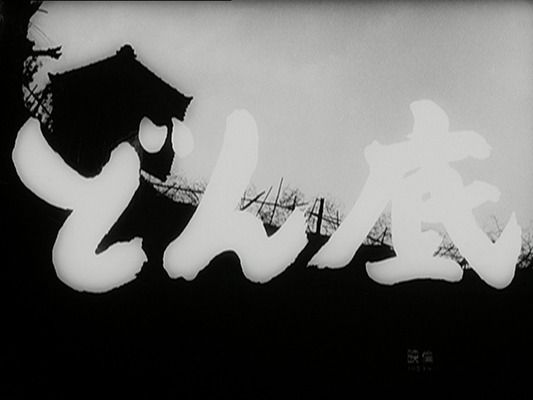


Dodesukaden
Dodes'ka-den is a film by Akira Kurosawa set in a 1970 era Japanese rubbish dump.
Hatsukoi: Jigoku-hen
A teenage goldsmith with a dark past tragically falls in love with a young nude model.
Nihon no ichiban nagai hi
Following the detonation of the atomic bombs on Hiroshima and Nagasaki, the Japanese military and the government clash over the demand from the Allies for unconditional surrender. Minister of the Army Anami leads the military officers who propose to fight on, even to the death of every Japanese citizen.
Kiga kaikyô
Three robbers escape with loot from a heist before one of them shoots the others. Their corpses wash up near the aftermath of a maritime calamity, provoking a policeman's interest.
Akahige
Set in feudal times, novice physician, Yuzo Kayama, is sent to a poor infirmary expecting just to visit, but is infuriated to learn he must stay. He tries to provoke his termination, but is foiled by head doctor "Red Beard" (Toshiro Mifune), a man whose methods are as caring as they are unpredictable.
Suna no onna
A vacationing entomologist suffers extreme physical and psychological trauma after being taken captive by the residents of a poor seaside village and made to live with a woman whose life task is shoveling sand for them.
Tengoku to jigoku
An executive on the outs with his company gets in deeper when he pays off kidnappers who have abducted the wrong boy.
Warui yatsu hodo yoku nemuru
A young executive hunts down his father’s killer. Continuing his legendary collaboration with actor Toshiro Mifune, Kurosawa combines elements of Hamlet and American film noir to chilling effect in exposing the corrupt boardrooms of postwar corporate Japan.
Ukikusa
A theater troupe master's visit with his old flame unintentionally sets off a chain of unexpected events with devastating consequences.
Ningen no jôken (I)
The Human Condition is a Japanese epic film trilogy made between 1959 and 1961. The trilogy follows the life of Kaji, a Japanese pacifist and socialist, as he tries to survive in the fascist and oppressive world of WWII-era Japan. No Greater Love (1959) opens with Kaji marrying his sweetheart Michiko despite his misgivings about the future.
Kakushi-toride no san-akunin
Lured by gold, two greedy peasants escort a man and woman across enemy lines. However, they do not realize that their companions are actually a princess and her general.
Donzoko
Residents of a rundown boardinghouse in 19th-century Japan, including a mysterious old man and an aging actor, get drawn into a love triangle that turns violent. When amoral thief Sutekichi breaks off his affair with landlady Osugi to romance her younger sister, Okayo, Osugi extracts her revenge by revealing her infidelity to her jealous husband.
Soshun
A young salaryman and his wife struggle within the confines of their passionless relationship while he embarks on an extramarital affair.
Anata kaimasu
A talent scout moves sharply, dead-set on signing a promising athlete to the baseball team the Toyko Flowers.
Karumen kokyô ni kaeru
A girl who had left her home village for life in Tokyo returns to her home years later, and evokes a scandal when the locals discover that she's a stripper.
Shûbun
Akira Kurosawa directed this drama about a paparazzi photo that a tabloid magazine spins into a scandalous story and soon sparks a court case.
Kaze no naka no mendori
Tokiko patiently awaits her husband's return from WWII when her four-year old son falls ill. She takes him to the doctor but has no means of paying, so she resorts to prostitution. A month later, her husband returns to find his desperate wife, who tells him the truth. Together, they must deal with the consequences.
Chichi ariki
Shuhei Horikawa, a poor schoolteacher, struggles to raise his son Ryohei by himself, despite neither money nor prospects.
Ukikusa monogatari
An aging actor returns to a small town with his troupe and reunites with his former lover and illegitimate son, a scenario that enrages his current mistress and results in heartbreak for all.
Kagirinaki hodo
Mikio Naruse’s final silent film is a gloriously rich portrait of a waitress, Sugiko, whose life, despite a host of male admirers and even some intrigued movie talent scouts, ends up taking a suffocatingly domestic turn after a wealthy businessman accidentally hits her with his car.
Hijosen no onna
A gangster tries to find redemption with the inadvertent help of an innocent shop girl and his jealous girlfriend will do anything to keep him.
Nasanunaka
In No Blood Relation, a gripping early example of Mikio Naruse’s cinematic boldness, featuring a screenplay by Ozu’s famed collaborator Kogo Noda, an actress returns to Tokyo after a successful stint in Hollywood to reclaim—with the help of her gangster brother—the daughter she abandoned years before.