
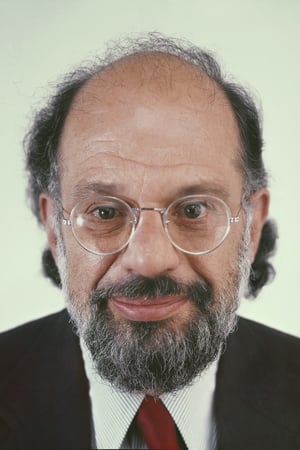
Allen Ginsberg
Irwin Allen Ginsberg (June 3, 1926 – April 5, 1997) was an American poet. He is considered to be one of the leading figures of both the Beat Generation during the 1950s and the counterculture that soon followed. He vigorously opposed militarism, economic materialism and sexual... Read full bio →
Featured Characters
Roles you can spot in Whatthemovie snapshots

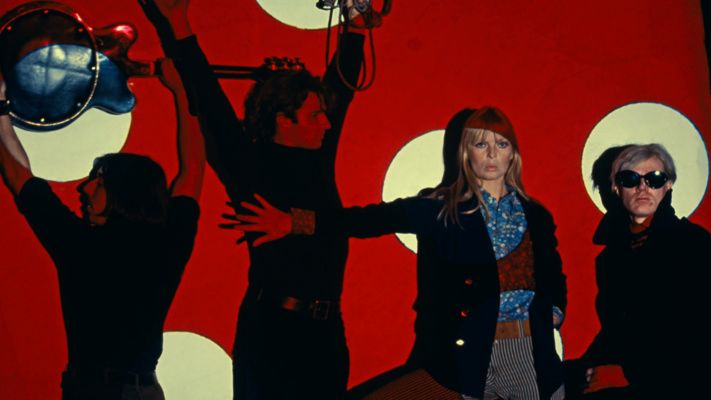




The Velvet Underground
Experience the iconic rock band's legacy in the first major documentary to tell their story. Directed with the era’s avant-garde spirit by Todd Haynes, this kaleidoscopic oral history combines exclusive interviews with dazzling archival footage.
Rolling Thunder Revue: A Bob Dylan Story by Martin Scorsese
Part documentary, part concert film, part fever dream, this film captures the troubled spirit of America in 1975 and the joyous music that Dylan performed during the fall of that year.
Take Your Pills
In a hypercompetitive world, drugs like Adderall offer students, athletes, coders and others a way to do more -- faster and better. But at what cost?
The B-Side: Elsa Dorfman's Portrait Photography
A look at the life and work of photographer Elsa Dorfman.
William S. Burroughs: A Man Within
William S. Burroughs: A Man Within is a well-crafted, brand new documentary which attempts to open up the legendary figure and see what made him tick. Showing at the 54th BFI London Film Festival, Yony Leyser’s film is a riveting and emotional journey into the world of a man many considered as cold as an iceberg on a winter night.
Howl
It's San Francisco in 1957, and an American masterpiece is put on trial.
No Direction Home: Bob Dylan
A chronicle of Bob Dylan's strange evolution between 1961 and 1966 from folk singer to protest singer to "voice of a generation" to rock star.
As I Was Moving Ahead Occasionally I Saw Brief Glimpses of Beauty
Director Jonas Mekas provides an intimate glimpse of his personal life by constructing a feature length narrative from over 30 years of private home movie footage.
Berkeley in the Sixties
A documentary about militant student political activity in the University of California-Berkely in the 1960's.
Before Stonewall
New York City's Stonewall Inn is regarded by many as the site of gay and lesbian liberation since it was at this bar that drag queens fought back against police June 27-28, 1969. This documentary uses extensive archival film, movie clips and personal recollections to construct an audiovisual history of the gay community before the Stonewall riots.
Burroughs: The Movie
An exploration of Burroughs’ life story, as told by Burroughs himself along with many of his contemporaries, including Allen Ginsberg, Brion Gysin, Francis Bacon, Herbert Huncke, Patti Smith, Terry Southern, and William Burroughs Jr.
Poetry in Motion
More than 20 contemporary North American poets recite, sing, and perform their work. Several also comment. Early in the film, Charles Bukowski talks about the energy of poets and of a poem. These poets are energetic performers, and their poems are meant to be heard.
Lost, Lost, Lost
Jonas Mekas adjusts to a life in exile in New York in his autobiographical film, shot between 1949 and 1963.
We Can't Go Home Again
Nicholas Ray plays himself, acting as mentor, friend, and artistic inspiration to his students at Binghamton. Preserved by the Academy Film Archive in partnership with The Film Foundation.
Ciao Manhattan
Fiction and documentary mingle in a freewheeling portrait of Susan Superstar, a New York celebrity on a drug-fueled downward slide that mirrors Edie Sedgwick’s own self-destructive spiral.
Breathing Together: Revolution of the Electric Family
The title of this Canadian documentary may have some relation to Canadian Marshall McLuhan's theories. It combines interview with famous U.S. militants of the '60s, such as Jerry Rubin and Abbie Hoffman, with reenactments of their Chicago trials (i.e., the "Chicago Eight," etc.).
Yippie
The Youth International Party, whose members were commonly called Yippies, was a radically youth-oriented and countercultural revolutionary group opposed to war and the status quo of American culture. Known for using theatrics and humor to advocate social change, several Yippies were notably on trial as the Chicago 7.
Herostratus
When Max, a young poet hires a marketing company to turn his suicide-by-jumping into a mass-media spectacle, he finds that his subversive intentions are quickly diluted into a reactionary gesture, and his motivations are revealed as a desperate attempt to seek attention through celebrity.
Dont Look Back
Don’t Look Back is a documentary of Bob Dylan’s 1965 tour of England. The film begins with the famous and some say best music video of all times "Subterranean Homesick Blues.” The cameras follow Dylan as he experiments with the electric guitar for the first time.
Chappaqua
Semi-autobiographical story of Conrad Rooks, who travels to France to undergo a drug-withdrawal cure. Flashbacks to the beginings of psychedelia in San Fran.
Wholly Communion
A short film documenting what was referred to as "The International Poetry Incarnation". It was billed as Great Britain's first full-scale "happening", with the world's leading Beat poets together under one roof at the Royal Albert Hall on June 11, 1965, for an evening of near-hallucinatory revelry.
Guns of the Trees
A depressed woman, Barbara, is on the verge of suicide while a man she meets in a church and a married couple try to convince her that life is worth living.
Pull My Daisy
Based on an incident in the life of Beat icon Neal Cassady and his wife, the painter Carolyn, the film tells the story of a railway brakeman whose wife invites a respected bishop over for dinner. However, the brakeman's Bohemian friends crash the party, with comic results. Pull My Daisy is a film that typifies the Beat Generation.