Critics
TSPDT's Brief Encounters

The Song of Ceylon
Ambitious documentary chronicling the cultural life and religious customs of the Sinhalese and the effects of advanced industrialism on such customs.
The film is a panorama shot-scene lasting just under a minute. The panorama film, as coined by Lumière, is a moving-camera shot--usually accomplished by placing the camera on a moving transport, such as a boat or train.
Rien que les heures
The life of a great city (Paris) from dawn until dusk, including the beautiful and the ragged, the rich and the poor, with little or no comment (intertitles) from the director, Cavalcanti (whose first film this was).
Amor
Shot in Rome and Salzburg’s natural theatre, the film uses cutting and sewing as metaphors for love, separation, and the craft of montage. Cloth being trimmed, hands clapping, and tools striking accompany images of tailoring, architectural restoration, and Beavers himself in a new suit, linking gesture and sound to the editing process.
Serene Velocity
"Serene Velocity (1970) created a stunning percussive head-on motion by systemically shifting the focal length of a stationary zoom lens as it stared down the center of an empty institutional hallway – thus playing off the contradiction generated by the frames’ heightened flatness and the compositions’ severely overdetermined perspective. Withou...
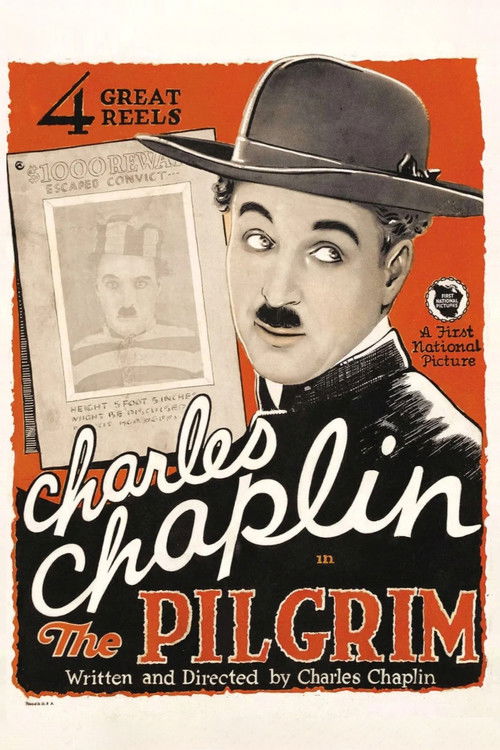
The Pilgrim
The Tramp is an escaped convict who is mistaken as a pastor in a small town church.
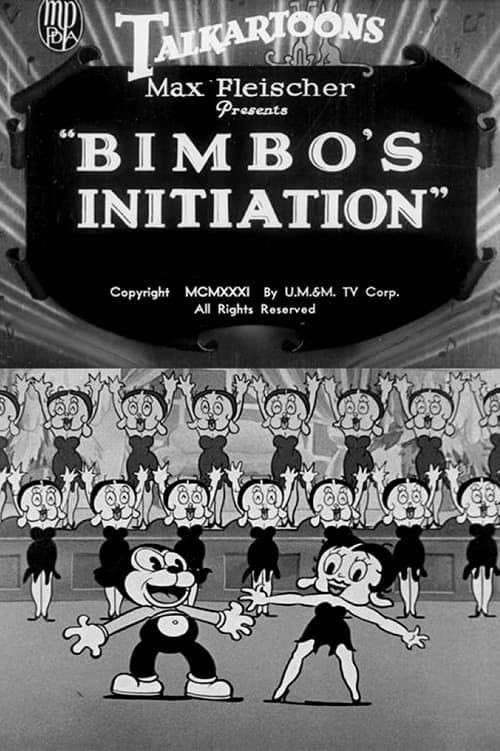
Bimbo's Initiation
Bimbo finds himself surrounded by a mysterious group of robed figures who invite him to become a member of their secret organisation. When he refuses, they fling him through a nightmarish sequence of terror and torture devices. Will our hapless hero make it out alive?
What Goes Up
Robert Breer’s What Goes Up... continues his “kitchen sink” approach of including as many different kinds of things as possible. Central to his art are a series of tensions. Rather than using animation to produce seamless illusions, his films reveal cinema’s dual nature as both an illusion of movement and a succession of stills. The ultimate eff...
Black and Tan
Duke Ellington plays hot jazz in a fictional story that finds him down on his luck; he tries in vain to dissuade his friend, dancer Fredi Washington, from working with heart trouble even though it means work for his band. Sure enough, she collapses on stage...
The Country Doctor
While caring for his sick daughter, a doctor is called away to the sickbed of a neighbor. He finds the neighbor gravely ill, and ignores his wife's pleas to come home and care for his own daughter, who has taken a turn for the worse.
Cosmic Ray
Experimental short uses Ray Charles' “What'd I Say” as accompaniment to constantly shifting collage of female nude, cartoons, and newsreels of atomic bomb explosions.
A short film containing a collection of clips from various Hollywood movies.
Protéa
Protéa is the last film directed by Victorin-Hippolyte Jasset, one of the early film pioneers in France. The hero of this film is a female spy, an acrobatic Mata-Hari, played by his favorite actress, Josette Andriot, who wore a characteristic costume of a close-fitting black jersey, two years before Musidora achieved cult status with her similar...

Commissioned by the heads of the 2000 Cannes Film Festival to make an opening-night short commemorating cinema as it enters its second full century, Godard instead offers up a 17-minute barrage of re-edited footage of wars and Nazi atrocities, interspersed with clips of Maurice Chevalier in "Gigi" and Godard's own "À bout de souffle."
The plot follows King Edward VII and President Armand Fallières dreaming of building a tunnel under the English Channel.
Sirius Remembered
A tribute to Stan Brakhage's pet dog Sirius, whose decompostion was recorded over 6 months after he had died. Preserved by the Academy Film Archive in partnership with The Film Foundation in 2010.
Aruanda
The real story of Quilombo Olho d'Água from Serra do Talhado, in the state of Paraíba, Brazil, which became institutionally isolated from the rest of the country. Quilombos were runaway slave communities in colonial Brazil.
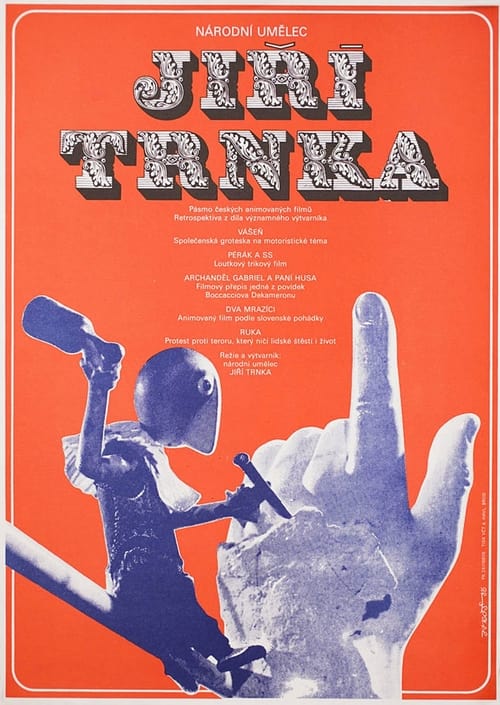
Ruka
A happy little potter is approached by a huge hand which wants him to sculpt its statue. The potter refuses, wanting nothing more than to be left alone with his only friend, a potted plant. As the hand's request gives way to bribery, demands, and threats, the potter becomes more desperate to escape its clutch, leading to tragedy.
Crossroads
The 1945 atomic-bomb explosion at Bikini Atoll becomes a thing of terrible beauty and haunting visual poetry when shown in extreme slow motion, shown from 27 different angles, and accompanied by avant-garde Western classical music composed for electric organ by Terry Riley. Preserved by the Academy Film Archive in partnership with Pacific Film A...
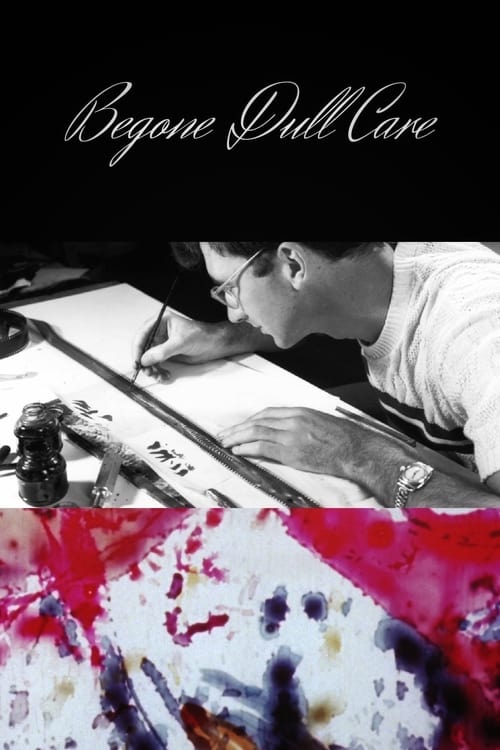
Begone Dull Care
In this extraordinary short animation, Evelyn Lambart and Norman McLaren painted colours, shapes, and transformations directly onto their filmstrip. The result is a vivid interpretation, in fluid lines and colour, of jazz music played by the Oscar Peterson Trio.
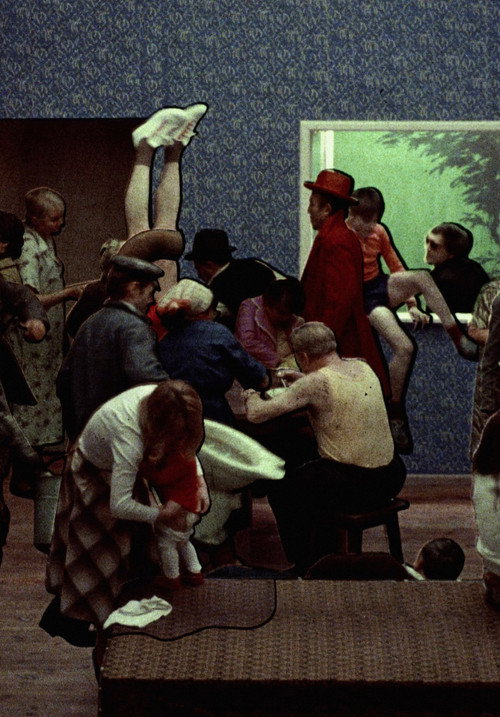
Tango
A static camera observes a room as it slowly fills with thirty-six characters from different stages of life, looping further through an absurd dance of social disconnection as each character moves in.
A short two-minute rumination on the once volatile situation during the period of the Bosnian War presented in the form of a photo-montage with accompanying text.
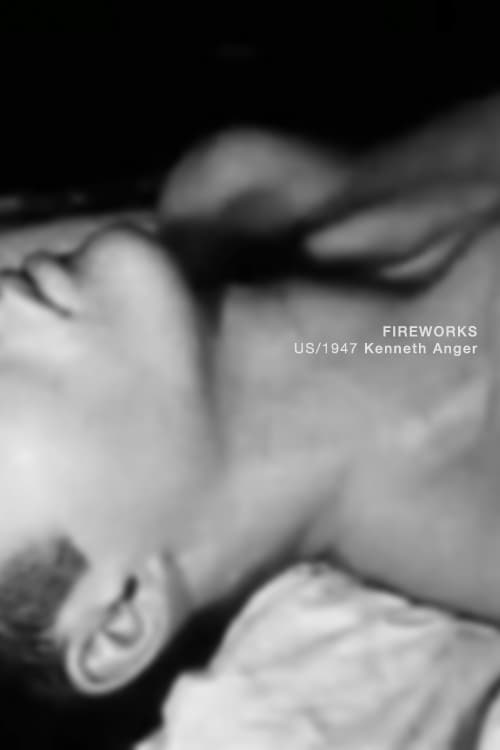
Fireworks
A dissatisfied dreamer awakes, goes out in the night seeking a 'light' and is drawn through the needle's eye. A dream of a dream, he returns to bed less empty than before.
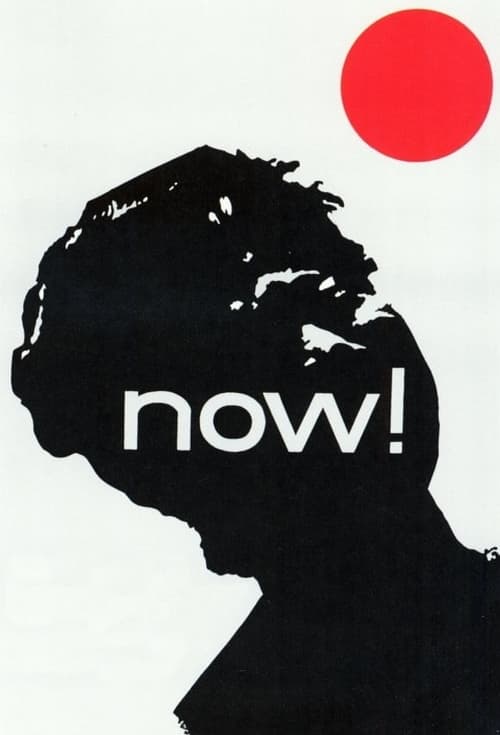
Now
Using morgue photos, newsreel footage, and a recording by Lena Horne, Cuban filmmaker Santiago Alvarez fired off 'Now!', one of the most powerful bursts of propaganda rendered in the 1960s.
2'45''
Raban layers recordings of successive film performances in which he stands before a projection, states the date and time, and says "A camera is filming the audience watching yesterday's audience watching the blank screen. Sounds of the projection and the audience's responses are being recorded."
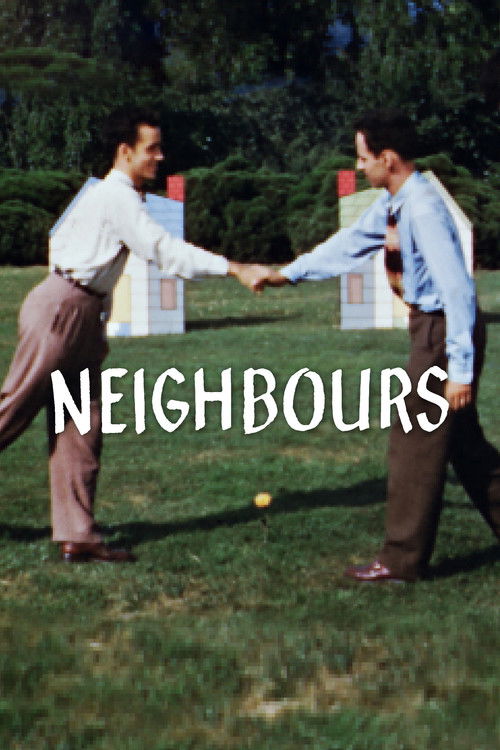
Neighbours
In this Oscar-winning short film, Norman McLaren employs the principles normally used to put drawings or puppets into motion to animate live actors. The story is a parable about two people who come to blows over the possession of a flower.
O Poeta do Castelo
A 10-minute portrait of modernist poet and de Andrade’s godfather, Manuel Bandeira, is clear in its affection for it subject, though like many New-Waveish films of the time, depicts the modern urban landscape as an ominous and alienating force.
The Immigrant
Charlie is an immigrant who endures a challenging voyage and gets into trouble as soon as he arrives in America.
Fuses
An experimental short in which a couple engaged in lovemaking is superimposed over ocean and beach scenes.
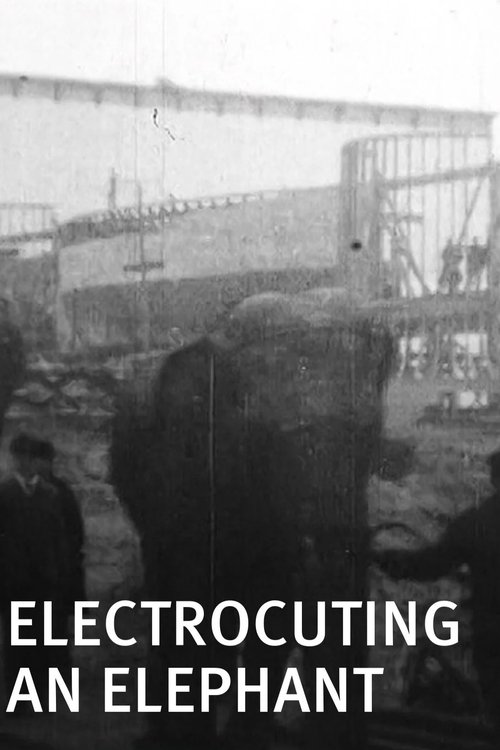
Film depicting the killing of Topsy, an elephant employed to help build Luna Park on Coney Island.
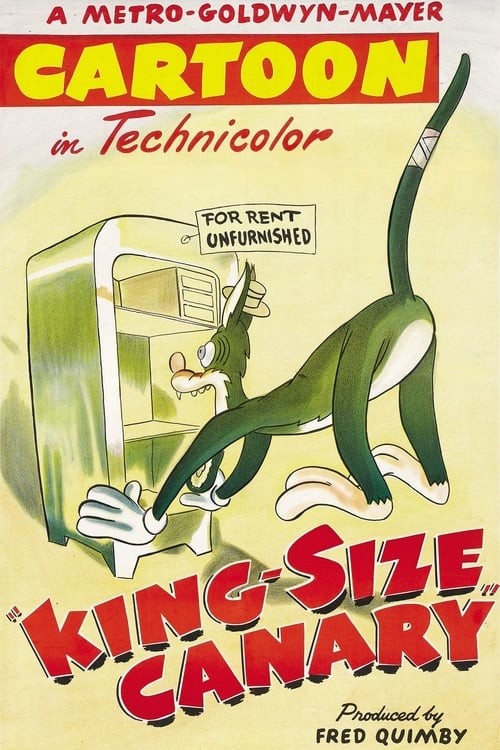
King-Size Canary
A hungry cat has the idea of giving "Jumbo Gro" fertilizer to a scrawny canary to make him a bigger meal, which leads to a race between the cat, the canary, a dog, and a mouse to see who can grow the biggest.
An attempt to transform a Roman Western into a Greek tragedy. The hero of Instructions for a Light and Sound Machine is easy to identify. Walking down the street unknowingly, he suddenly realizes that he is not only subject to the gruesome moods of several spectators but also at the mercy of the filmmaker.
Jazz Dance
Few films wield the awesome spiritual power of Jazz Dance, on which Leacock was one of two cameramen charting the slow, smoldering build of a Manhattan dance club from idle space to explosive, carnal bacchanal. Employing handheld cameras, limited light and sheer proximity, the film achieved an intimacy never before witnessed in a documentary.
Lucifer Rising
Lucifer Rising is a short film by director Kenneth Anger. The film was completed in 1972 and starred British singer Marianne Faithfull, but only widely distributed in 1980. The film's soundtrack was composed by Bobby Beausoleil.
Hanoi, martes 13
In December 1967, a Cuban film crew led by Santiago Alvarez, the veteran polemicist, travelled to Hanoi. They shot the footage which constitutes this short documentary all in one day - Tuesday 13. The film is the story of that day and what happened to the North Vietnamese people in the course of it.
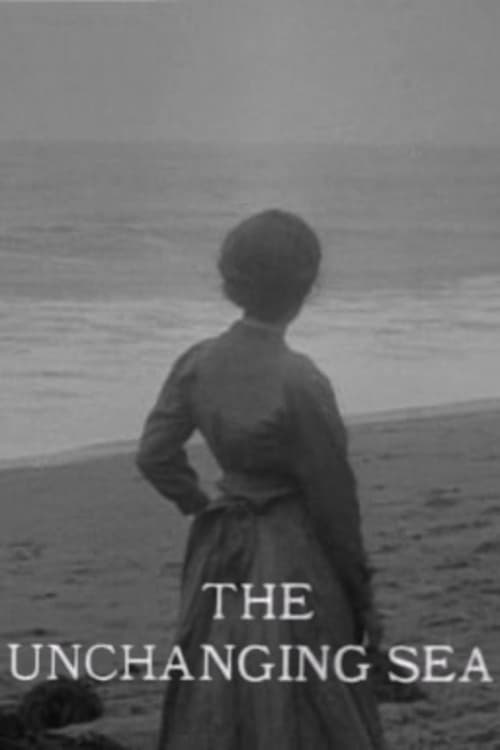
The Unchanging Sea
In this story set at a seaside fishing village and inspired by a Charles Kingsley poem, a young couple's happy life is turned about by an accident. The husband, although saved from drowning, loses his memory. A child is on the way, and soon a daughter is born to his wife. We watch the passage of time, as his daughter matures and his wife ages. T...
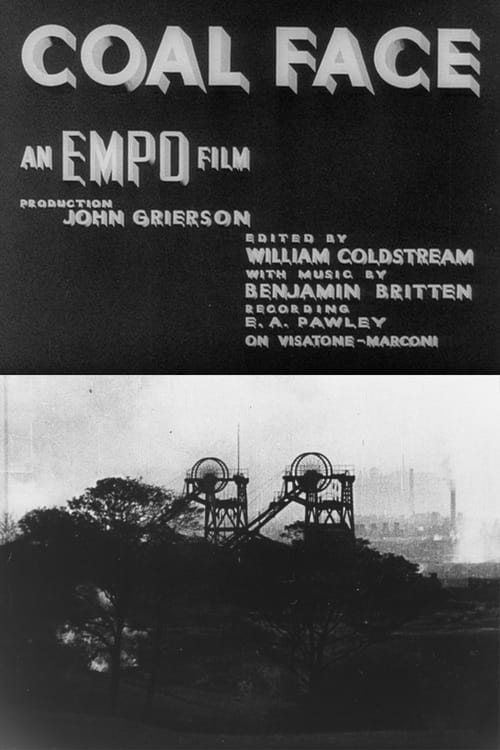
Yellow Caesar
Using edited archive footage, mockery is made of Italy's dictator Benito Mussolini.
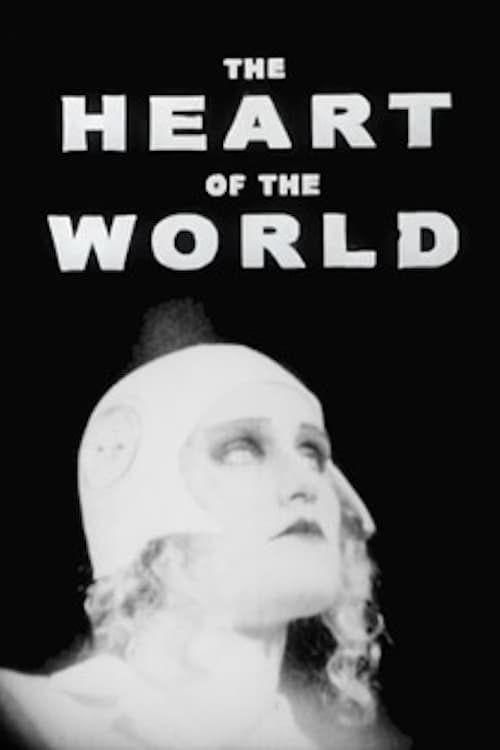
Pure fantasia, a race to save the world from a fatal heart attack, juxtaposed against a love rivalry between two brothers - a mortician and an actor playing Christ - for the heart of a scientist studying the earth's core.
A hungry mosquito spots and follows a man on his way home. The mosquito slips into the room where the man is sleeping, and gets ready for a meal. His first attempts startle the man and wake him up, but the mosquito is very persistent.
The Mothering Heart
A young couple struggle to get ahead, the wife always assuaging the troubles of her melancholy husband. As he climbs the ladder of success, he abandons the homely values and begins an affair with a beautiful woman. His wife leaves him, returning to her mother's home where she bears a child. When the husband is abandoned by his lady friend, remor...
Exodus
The film documents two men carrying palm trees through the streets of East London. McQueen tracked the men through a bustling Brick Lane market.
Renaissance
To the sound of trumpets, a collection of pulverised antique bric-a-brac begins to reassemble itself, revealing a stuffed owl, a cornet, a hamper, books, a doll, a plate – and a bomb...
Side/Walk/Shuttle
In this infamous structural film, Ernie Gehr takes to the glass elevator attached to San Francisco's Fairmont Hotel and rides its 24 stories up and down, constantly shifting the orientation of his camera to offer images of the city as a zone of constant flux, freed from gravity and in perpetual rearrangement.
A story of life and death, featuring Lozinski's six-year-old son Tomaszek and elderly people spending time on the benches of a Warsaw park. Riding his scooter, Tomaszek asks the elderly very adult, though basic, questions, which they are happy to answer. The boy's ideas of future and life are confronted with those of men at the end of their lives.
Three men in a rowboat are leaving the harbor.
L'amour existe
An essay film critiquing post-war France's urban developments- Pialat states that modernity and suburban convenience have limited Parisian freedom and widened class gaps.
Pass the Gravy
Schultz raises prize chickens and roosters that are always getting into neighbor Max Davidson's garden and eating the seeds, leading to constant feuding between the two men. When their children announce their engagement the two men decide to bury the hatchet and Davidson suggests a dinner at his house. He gives his young son, Ignatz, two dollars...